Water-Resistant vs. Waterproof Outdoor Rugs: Which One Do You Actually Need?
Most outdoor rugs are not waterproof. They don’t need to be. Water-resistant polypropylene construction handles rain, spills, and humidity without trapping moisture, making it the smarter and more durable choice for decks, porches, and covered patios. If you’re searching for a “waterproof outdoor rug,” what you actually want is probably this.
In this article:
- The honest answer about outdoor rugs and water
- Can outdoor rugs get wet?
- What happens if an outdoor rug gets rained on?
- What material is best for an outdoor rug in the rain?
- Outdoor rugs for every space: what to look for
- Do indoor/outdoor rugs hold up differently than outdoor-only rugs?
- How to choose the right outdoor rug
- FAQ
The honest answer about outdoor rugs and water
Here’s something the rug industry doesn’t always say clearly: a truly waterproof rug (one that completely blocks all moisture penetration) would be sealed so thoroughly it couldn’t breathe. That means trapped water underneath, accelerated mold growth, and a surface that feels nothing like a rug.
What outdoor rugs actually offer is water resistance. That distinction matters because it changes how you choose, where you place, and how you care for whatever ends up on your patio.
Water-resistant means the fibers repel moisture rather than absorbing it. Rain hits the surface and drains through or beads off. After a shower, the rug dries quickly in open air.
After a heavy downpour, it may be fully saturated — and that’s fine, as long as there’s airflow underneath and the rug isn’t left sitting in pooled water for days.
A fully waterproof outdoor rug (typically vinyl or PVC construction) does exist, but it behaves less like a rug and more like a mat. The texture, the warmth underfoot, the visual softness — gone. For most people decorating a deck or porch, that’s not the tradeoff they want to make.
Can outdoor rugs get wet?
Yes, and they’re built for it.
When rain falls on a well-made outdoor rug, the water briefly beads on the surface, then drains through the weave. Synthetic fibers like polypropylene don’t absorb moisture the way natural fibers do, so the rug doesn’t become waterlogged in a way that causes structural damage.
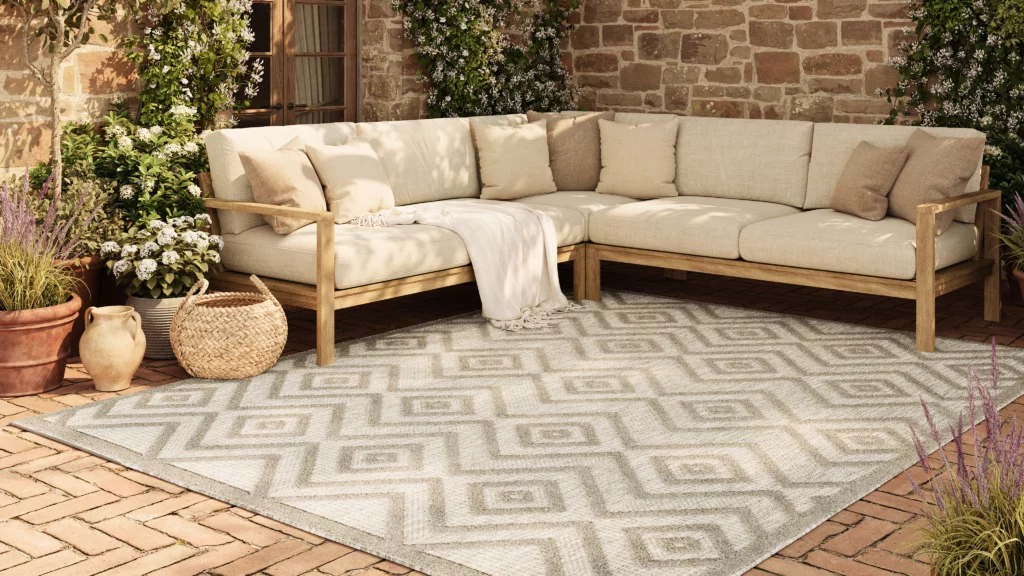
The key variable is where the rug is placed. A covered porch gives a rug more protection and faster drying time than a fully exposed deck with no airflow underneath. Slatted decking is ideal, air moves beneath the rug and speeds the drying process significantly.
A solid concrete surface without drainage can slow things down and increase the chance of mildew developing beneath the rug.
Placement isn’t just about aesthetics. It directly affects how long your outdoor rug lasts.
What happens if an outdoor rug gets rained on?
Assuming the rug is made from synthetic performance fibers and has proper drainage beneath it, a rainstorm is not a problem. The rug gets wet, drains, and dries. In direct sun with good airflow, most flatwoven polypropylene rugs dry within a few hours.
Where things go wrong is when moisture stays trapped. A few specific scenarios cause this: debris accumulating underneath (leaves, dirt, mud) that holds moisture against the fibers, rugs placed flat on non-draining surfaces, or very thick-pile outdoor rugs that retain water longer than flatweave constructions.
Mold doesn’t typically develop from rain alone. It develops when a rug stays damp without enough airflow to dry properly. Regular maintenance (shaking out debris, occasionally lifting the rug to check underneath, hosing it off and letting it dry fully before replacing) prevents most issues.
If you wanna learn more about how to clean an outdoor rug, check our quick outdoor rug care guide here.
What material is best for an outdoor rug in the rain?
Polypropylene is the benchmark. It’s the most widely used performance fiber in outdoor rug construction for good reason: the polymer’s nonpolar structure makes it hydrophobic, meaning it naturally repels water rather than absorbing it. It also resists UV fading, mold, mildew, and staining. After rain exposure, a polypropylene rug dries faster than polyester or nylon, both of which retain more moisture.
The construction method matters as much as the fiber type. Flatwoven constructions dry the fastest because they’re thinner and allow air to move through more easily. Low-pile rugs perform well too. Thicker or plushier outdoor rugs take longer to dry and are better suited to covered porches than fully exposed decks.
Avoid natural fibers (jute, sisal, seagrass) in any outdoor area that sees regular moisture. They absorb water readily, take much longer to dry, weaken over time with repeated soaking, and are prone to mold. They can work in covered, semi-outdoor spaces, but they’re not built for rain.
For areas with UV exposure as well as rain, look for solution-dyed polypropylene. The color is embedded throughout the fiber rather than applied on top, which means fading resistance that holds up over years of sun exposure, not just seasons.
Outdoor rugs for every space: what to look for
The right construction depends on where the rug is going and how much exposure it faces.
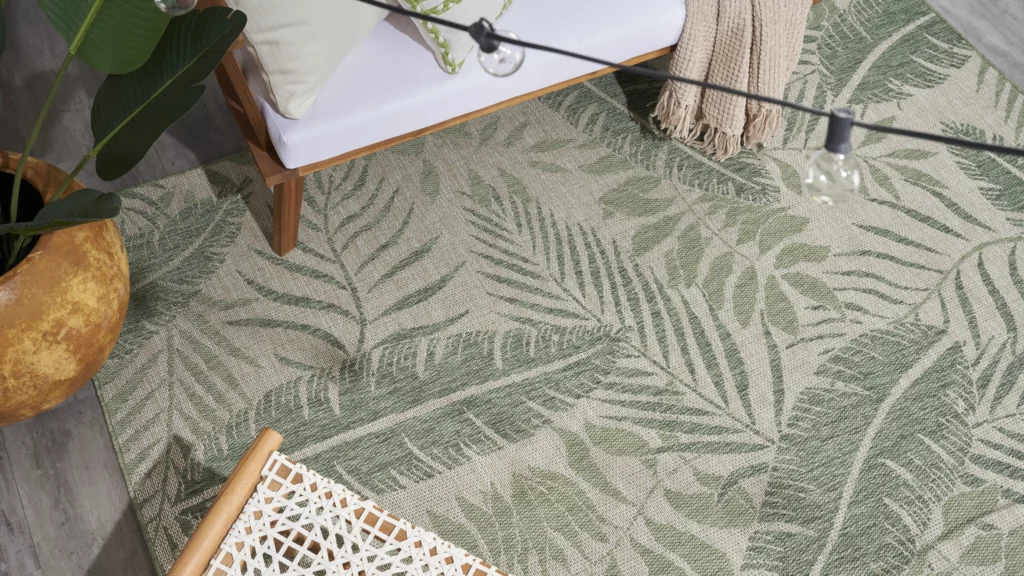
Covered porch: The most forgiving setting. Limited direct rain and UV exposure means you have more flexibility in pile height and pattern complexity. Aloha brings bold tropical pattern in durable performance fibers, and Positano offers a classic, clean aesthetic that reads as elevated without requiring extra care.
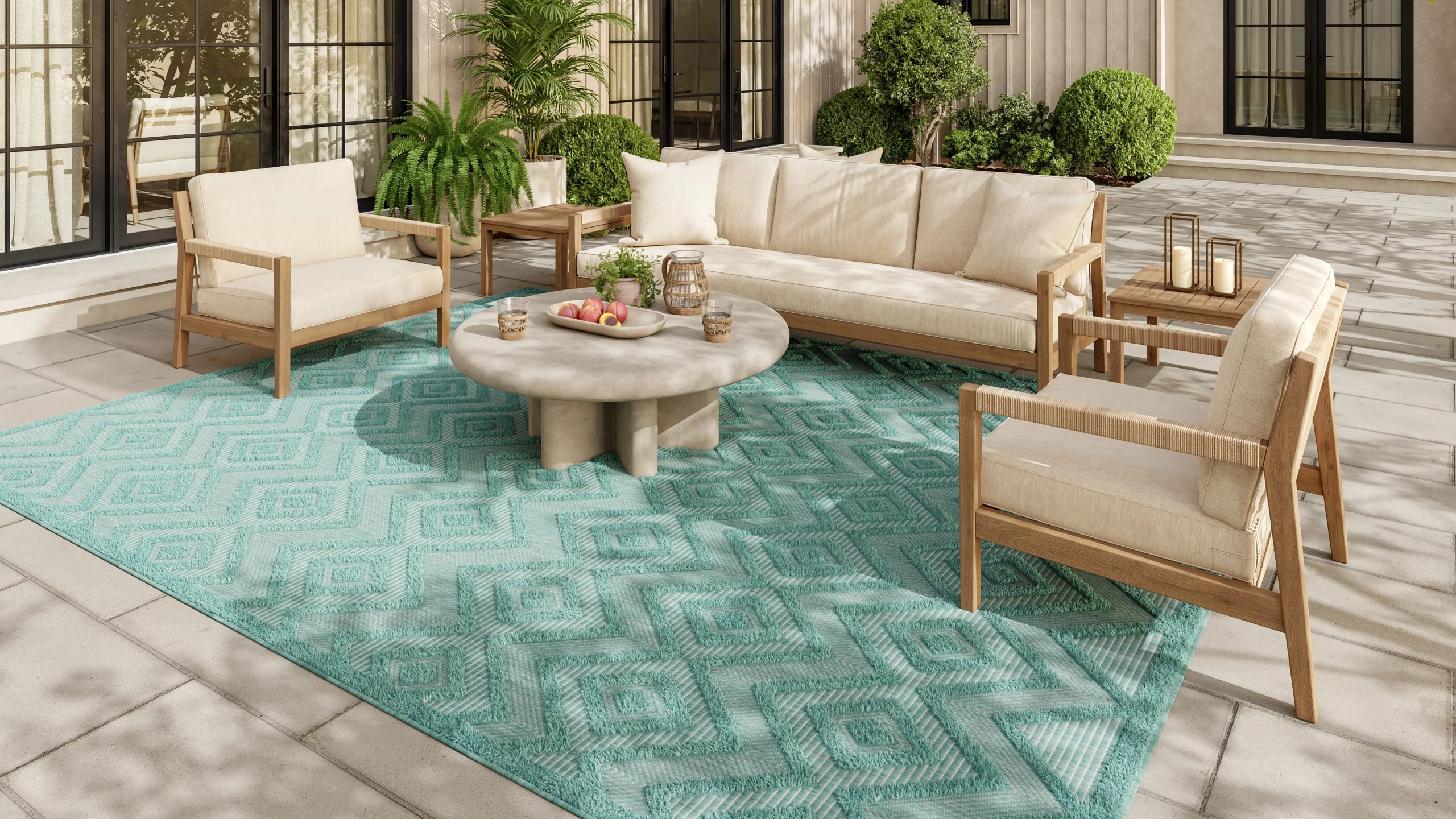
Open deck: Maximum exposure to sun, rain, and foot traffic. Prioritize flatwoven or low-pile polypropylene with a synthetic backing. Horizon is built for exactly this: low-profile, quick-drying, and designed to hold its color in direct sun.
Patio or concrete surface: Drainage is the main concern here. Without slatted decking to allow airflow underneath, moisture can sit between the rug and the surface. Lift the rug periodically and let both sides dry. Tulum makes this easier with its flatwoven construction.
Poolside: Constant moisture, heavy foot traffic, and strong UV exposure make this the most demanding setting. Stick with solution-dyed polypropylene in a low-pile or flatwoven construction. Color Splash and Garden Oasis both bring the visual energy a pool area calls for without compromising on durability.
Sunroom or covered outdoor living space: Protected from rain but often bright with indirect light. Indoor/outdoor rugs bridge the gap between indoor softness and outdoor practicality. Nourison Home Versatile is a natural fit for this in-between space.
Entryway or mudroom transition: High traffic, frequent dirt, and occasional wet shoes. Easy-clean flatwoven constructions handle this well. Any of the collections above move easily into this role — look for designs that don’t show wear patterns quickly and can be hosed down without issue.


Do indoor/outdoor rugs hold up differently than outdoor-only rugs?
In most cases, the difference is minimal. Indoor/outdoor rugs are typically woven from the same polypropylene or polyester performance fibers as outdoor-only designs, they’re just styled for dual use, with patterns and colors that feel at home on a patio or in a mudroom, a sunroom, or a high-traffic hallway.
The construction is what determines weather performance, not the label. A flatwoven, solution-dyed polypropylene indoor/outdoor rug will handle rain as well as any rug marketed specifically as “outdoor.” What an indoor/outdoor designation adds is flexibility. These rugs move between spaces without looking out of place.
How to choose the right outdoor rug
A few practical questions narrow it down quickly.
Is the space covered or exposed? Covered porches allow more construction options. Exposed decks need flatwoven or low-pile polypropylene.
What’s the surface underneath? Slatted decking allows drainage. Solid concrete or tile doesn’t, so you’ll need to lift and dry the rug more actively.
How much direct sun does the area get? High UV exposure calls for solution-dyed fiber. It’s the only construction that resists fading at the fiber level rather than the surface level.
How much foot traffic does this area see? Higher traffic (especially pool access or areas where people come in from the yard) benefits from flatwoven constructions that clean easily and don’t trap debris.
If you’re buying for a deck or porch for the first time, polypropylene flatweave in a mid-tone colorway is the easiest choice to live with. It performs, it cleans easily, and it reads as intentional no matter what furniture it sits under.
FAQ
Q: Are outdoor rugs actually waterproof? A: No. Most outdoor rugs are water-resistant, not waterproof. Water-resistant polypropylene rugs repel moisture and dry quickly after rain, but they allow water to pass through the weave rather than blocking it entirely. This is a better design for outdoor use than true waterproofing, which would trap moisture underneath the rug.
Q: Can I leave an outdoor rug outside all season? A: Yes, with proper care. Most polypropylene outdoor rugs are designed to handle extended outdoor exposure, including UV and rain. Shake out debris regularly, lift the rug occasionally to check for moisture underneath, and store or cover the rug during prolonged periods of heavy rain or freezing temperatures if possible.
Q: What’s the best outdoor rug material for a rainy climate? A: Solution-dyed polypropylene in a flatwoven or low-pile construction. The fiber repels water, resists mold and mildew, and dries quickly. Solution-dyeing protects against color loss from UV exposure, which often accompanies wet climates. Avoid natural fibers like jute or sisal in areas with regular rainfall.
Q: Will an outdoor rug damage my deck? A: A water-resistant rug on a slatted deck with good drainage is unlikely to cause damage. The risk is trapped moisture between the rug and a solid, non-draining surface. Lift the rug periodically to let both surfaces dry, and ensure debris doesn’t accumulate beneath it.
Water resistance is the right specification for an outdoor rug. It handles rain, stands up to the sun, and keeps its shape through seasons of use. No outdoor rug needs to be waterproof to do its job well. Knowing that makes the choice simpler, and it means you can focus on the part that actually matters: finding something you’ll want to look at every time you walk outside.