Hand-Knotted Rugs: Are They Really Worth the Price? An Honest Guide
A genuine hand-knotted rug is worth the price if you plan to keep it for decades and want a piece that improves with age. You are paying for hundreds of hours of skilled labor, natural fibers, and a construction method that machines still cannot fully replicate. Whether it is worth it to you depends on how you use a rug and how long you expect to own one.
We have sold rugs for over 45 years, and this is the question we get asked most often in showrooms. So let’s answer it honestly, with real numbers, not just reassurance.
What makes a rug hand-knotted?
A hand-knotted rug is made by tying individual knots, one at a time, around the vertical threads of a loom, called the warp. Each row of knots is followed by a horizontal weft thread, then packed down with a comb before the next row begins. There is no glue, no machine backing, and no shortcut. A skilled weaver ties between eight thousand and fourteen thousand knots per day, depending on the pattern’s complexity.
Knot density matters more than most shoppers realize. Entry-level hand-knotted rugs run around forty to eighty knots per square inch. Fine pieces, often wool-silk blends from regions with centuries of weaving tradition, can reach two hundred fifty knots per square inch or higher. Higher knot density means finer detail in the pattern, a denser pile, and a rug that holds its shape longer. This single number is the closest thing to an objective quality metric in the entire hand-knotted category.
Fiber matters just as much as knot count. New Zealand wool is prized for hand-knotted construction because of its long staple length and natural lanolin content, which gives the fiber resilience and a subtle sheen. Wool-silk blends add silk highlights to the pattern for a more luminous, formal look, though pure wool remains the more durable everyday choice.
Our Rug Materials 101 is a great starting guide to understanding more about fibers and construction.
How long does a hand-knotted rug last?
A well-made hand-knotted rug can last twenty to one hundred years with proper care, and many antique pieces in circulation today are more than seventy years old and still functional. That longevity comes from the knot construction itself. Because each knot is individually tied and anchored to the warp, the pile does not shed or unravel the way a tufted or machine-made rug can when a single fiber pulls loose.

Wool is also naturally resilient. It compresses under foot traffic and then springs back, which is why a good hand-knotted rug can look nearly new after a decade of daily use, while a lower-quality rug flattens permanently within a few years. Over time, hand-knotted wool rugs develop a soft patina, a gentle mellowing of color and sheen that comes from light exposure and years of gentle wear. Collectors and designers often consider this patina a feature, not a flaw.
Check our complete guide to wool rugs to learn how to take care of yours.
Hand-knotted vs machine-made: what’s actually different?
This is the comparison most shoppers are actually trying to make, and the honest answer is that hand-knotted vs machine-made comes down to construction, materials, and time, not just appearance.
A machine-made rug is woven on a power loom that can produce a rug in a matter of hours, using synthetic fibers like polypropylene or a wool blend fed through automated machinery. A hand-knotted rug takes anywhere from several months to over a year to complete, depending on size and knot density, and is made almost entirely from natural fibers.

The practical differences show up over time. Machine-made rugs are more affordable and often more consistent in color, which makes them a smart choice for a first home, a high-turnover rental, or a room where your style might change in a few years. Hand-knotted rugs cost more upfront but hold their value, can often be repaired rather than replaced, and age visually in a way synthetic fibers do not.
If you are choosing between a handmade area rug and a machine-made one purely on visual pattern, they can look similar from across the room. Up close, the back of the rug tells the truth: a hand-knotted piece shows the same pattern on the reverse side, since there is no separate backing layer.
What does hand-knotted rug price actually reflect?
Hand-knotted rug price reflects labor hours, fiber quality, and knot density, not brand markup. A single 8×10 rug with moderate knot density can represent three to six months of a weaver’s work. That labor cost does not disappear once the rug reaches a showroom. It is the majority of what you are paying for.
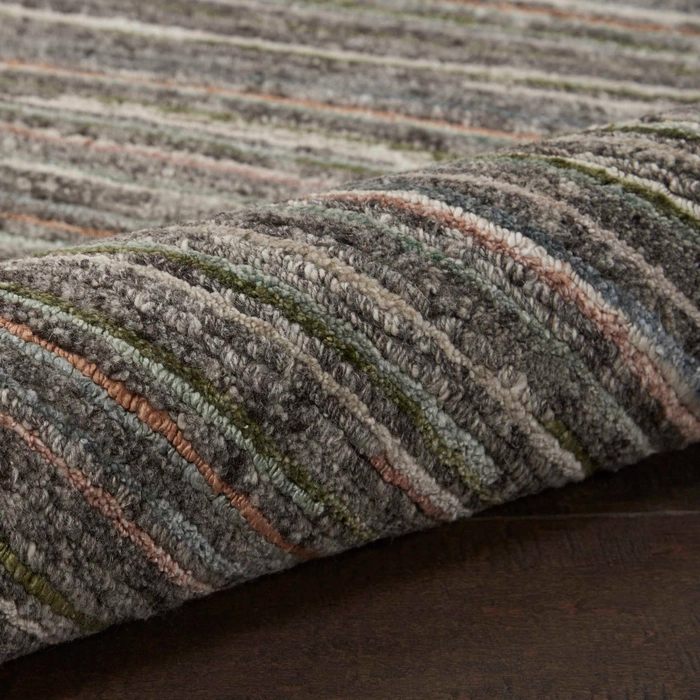
Fiber sourcing adds to the cost as well. A luxury wool rug made from hand-carded, hand-spun wool costs more to produce than one made from machine-spun yarn, even before a single knot is tied. Wool-silk blends cost more still, since silk is a delicate, labor-intensive fiber to weave.
This is also why hand-knotted rug benefits tend to show up most clearly in resale and longevity, rather than in the first year of ownership. A quality hand-knotted rug is closer to a piece of furniture than a decorative accessory. It depreciates far more slowly than most home goods, and well-maintained pieces from respected weaving regions can even appreciate.
Are hand-knotted rugs good for high-traffic areas?

Yes, wool hand-knotted rugs are genuinely good for high-traffic areas because wool fiber resists soiling, hides foot traffic wear, and bounces back from compression better than most synthetic alternatives. This is part of why wool has remained the standard fiber for entryways, living rooms, and dining rooms for generations, long before synthetic fibers existed.
That said, a fine wool-silk hand-knotted rug with very high knot density is better suited to a formal living room or bedroom, where foot traffic is lighter and the finer fibers are not exposed to grit and moisture daily. For a true high-traffic zone, look for a denser, all-wool construction rather than the most delicate silk-blend option.
How to choose a hand-knotted rug: a quick checklist
- Check the back of the rug. The pattern should be visible and match the front closely.
- Ask about knot density. Higher is generally finer, but a well-made rug at forty to sixty knots per square inch is still a quality piece for everyday rooms.
- Confirm the fiber. Wool for durability, wool-silk blends for formal spaces and added sheen.
- Think in decades, not seasons. If you plan to move or redecorate within a couple of years, a machine-made rug may serve you better. You can read our article about the benefits of machine-made rugs here.
- Ask where and how it was made. Reputable weaving regions and transparent sourcing are good signs of an authentic hand-knotted rug.
FAQ
Q: Is a hand-knotted rug worth it? A: Yes, if you want a rug built to last decades and are comfortable paying more upfront for natural fibers and hand labor. It is less worth it if you need a rug for a short-term space or want maximum pattern variety at a lower cost, in which case a machine-made rug is a smarter fit.
Q: What is the difference between hand-knotted and handmade? A: Hand-knotted is one specific type of handmade rug, made by individually tying knots around a loom’s warp threads. “Handmade” is a broader term that also includes hand-tufted and hand-woven flatweave rugs, which use faster techniques and are generally less expensive than true hand-knotted construction.
Q: How can I tell if a rug is really hand-knotted and not hand-tufted? A: Look at the back of the rug. A hand-knotted rug shows the same pattern on the back as the front, with no fabric backing or glue visible. A hand-tufted rug will have a canvas backing on the reverse side, since the yarn is punched through a fabric base rather than knotted by hand.
Q: Do hand-knotted rugs need special care? A: Regular vacuuming without a beater bar, rotating the rug every six to twelve months, and professional cleaning every one to two years is generally all a hand-knotted wool rug needs. Avoid harsh chemical cleaners, which can strip natural lanolin from the wool fibers.