The Best Indoor/Outdoor Rugs for Every Space: A Complete Guide
An indoor/outdoor rug needs to do something a standard area rug does not: hold up to sun, rain, foot traffic, and whatever else a patio or entryway can throw at it and still look good while doing it. The best material for an outdoor rug is solution-dyed performance fiber, commonly known as polypropylene, which resists UV fading, dries quickly after rain, and handles high traffic without showing wear. But material is only part of the decision. The right rug also depends on where it lives.
This guide covers what to look for, space by space, so you can shop with a clear picture of what actually works.
What Makes an Indoor/Outdoor Rug Different from a Regular Area Rug
Not every rug can live outside. Standard area rugs made from wool, viscose, or cotton absorb moisture and take too long to dry, which leads to mildew. Natural fiber rugs like jute break down with repeated exposure to humidity. An indoor/outdoor rug is specifically constructed to handle these conditions.
The key differences come down to fiber and construction. Indoor/outdoor rugs are typically made from solution-dyed synthetic fibers, most often performance fibers like polypropylene or PET (polyester). Solution-dyeing means the color is part of the fiber itself rather than applied on top, which is what gives these rugs their UV resistance. Unlike surface-dyed rugs, solution-dyed fibers don’t fade when exposed to direct sunlight over time.
Most indoor/outdoor rugs also have a synthetic or open-weave backing that allows water to drain rather than pool. This is what makes a quick drying time possible. A performance fiber rug made from polypropylene rug left in the rain can feel dry to the touch within a few hours under normal conditions.
One more distinction worth noting: indoor/outdoor rugs are not outdoor-only rugs. The “indoor/outdoor” designation means the rug is constructed to handle conditions on either side of the threshold. Many people use them in kitchens, mudrooms, playrooms, and high-traffic hallways for exactly the same reasons they work well on a porch.
Patio Rugs: What to Look for in a High-Traffic Outdoor Space
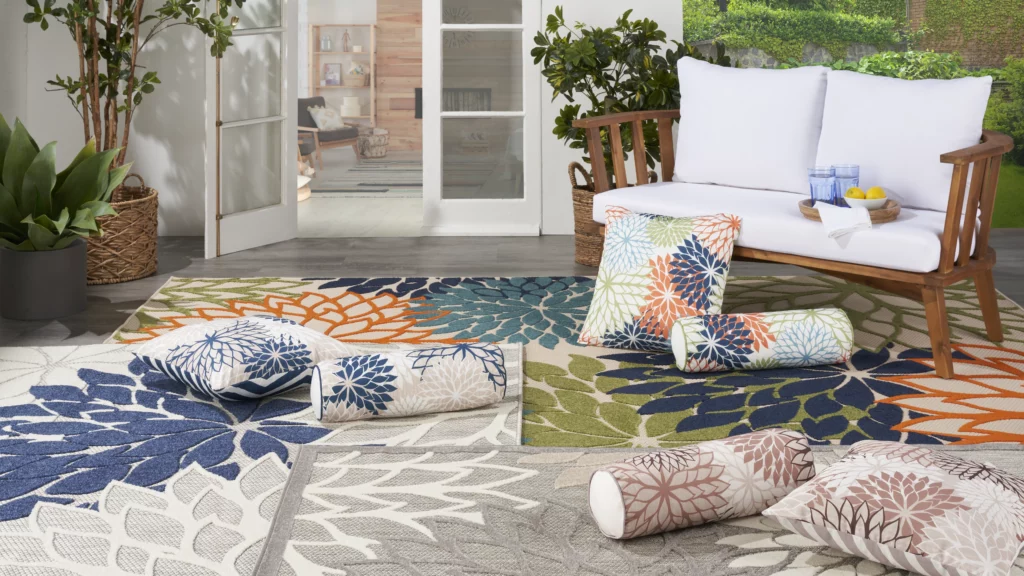
A patio rug faces more than most. Direct sun, summer rain, dirty shoes, and sometimes pets and kids all at once. Durability is the first filter here, and solution-dyed polypropylene meets it well. The fibers resist both UV degradation and staining, which is why polypropylene dominates the outdoor rug category.
Beyond fiber type, pile construction matters on a patio. A low-pile or flatwoven construction is more practical outdoors than a high pile. It drains faster, dries more evenly, and doesn’t trap as much debris from foot traffic. It also tends to lay flat more reliably, which reduces trip hazards on uneven surfaces.
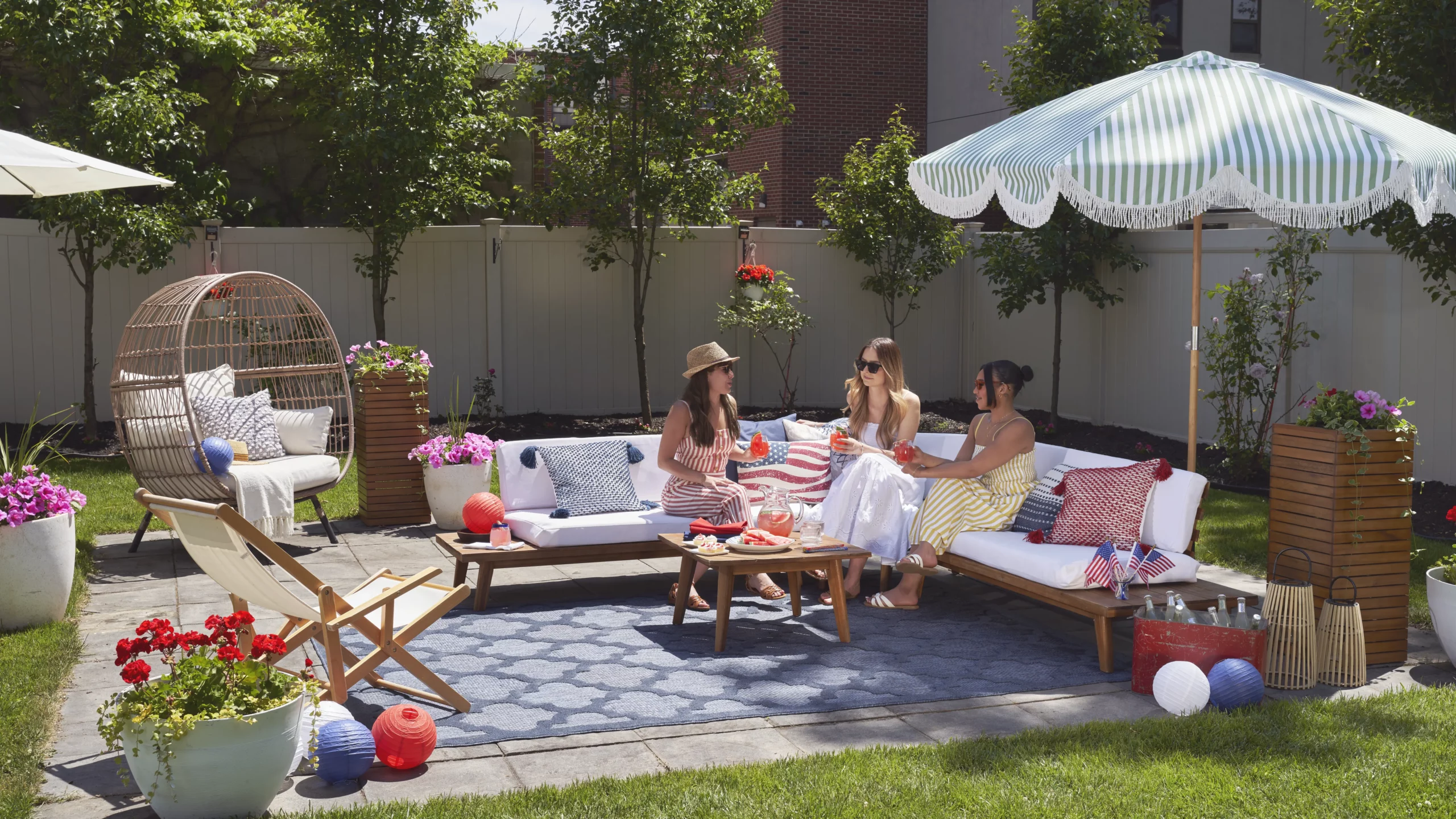
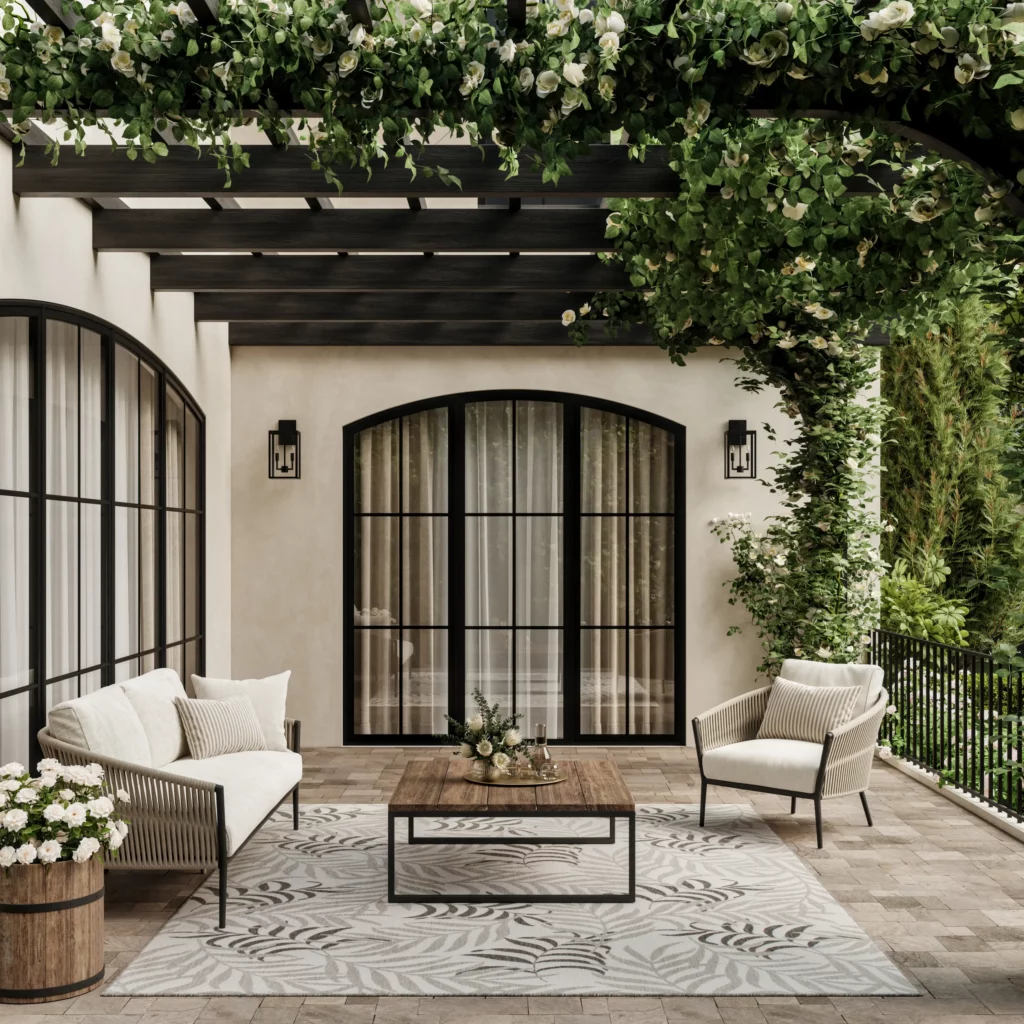
Size is its own conversation for patios. The general rule is to size the rug to the seating area, not the full patio. Front legs of chairs and sofas on the rug, back legs off, is acceptable. A rug that feels too small looks like an afterthought; too large and it competes with the architecture.
Deck and Porch Rugs: Covered Exposure vs. Open Air
Decks and porches present two distinct scenarios, and the distinction matters when choosing a rug.
A covered porch limits direct rain exposure but doesn’t eliminate humidity. Moisture rises from below, and morning dew still reaches rugs under partial cover. Polypropylene handles this well. A screened or fully covered porch gives you a bit more flexibility on pile height since the rug won’t be sitting in puddles, but the fiber recommendation stays the same.
An open deck is the most demanding environment. Whatever rug goes there will be fully exposed to sun, rain, and temperature swings across seasons. Performance fiber construction works best here. Avoid anything with a jute or natural fiber backing, because it will degrade faster than the face fiber and can leave marks on the deck surface below.
Anchoring the rug matters more on a deck than in most indoor settings. Smooth deck surfaces offer little grip, so a rug pad rated for outdoor use is worth the investment. It protects the deck finish and keeps the rug from shifting underfoot.


Balcony Rugs: Small Footprint, Specific Requirements
Balconies bring their own set of constraints. Space is usually limited, drainage considerations are real (water needs somewhere to go), and balcony surfaces are often concrete or tile, which can affect how a rug lays and holds.
For small balconies, the typical approach is to use the rug to define the seating zone rather than cover the entire surface. A rug that fits a loveseat or two chairs with a small table is usually enough. Standard sizes in the 4×6 or 5×7 range work well in most balcony configurations.
Because balcony drainage matters, an open-weave or flatwoven construction is preferable to anything with a closed backing. Water that can’t pass through tends to pool beneath the rug, which creates problems for the balcony surface underneath and extends the rug’s drying time significantly.
Weight is also a practical consideration on a balcony. Lighter rugs can shift in wind. A rug pad helps, and looking for collections with some weight or structure in the weave makes a noticeable difference.
Sunroom Rugs: Where Indoor/Outdoor Meets Interior Design
A sunroom is technically indoors, but it lives like an outdoor space in terms of UV exposure. If the room has significant natural light, especially south or west-facing windows, fiber choice still matters. A standard area rug will fade faster in a sunroom than it would in a north-facing interior room.
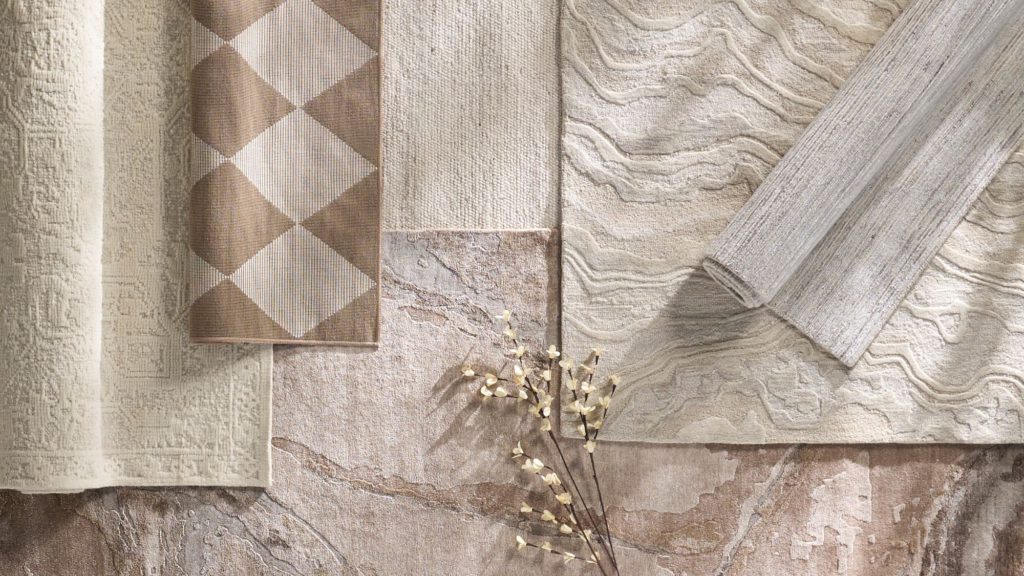
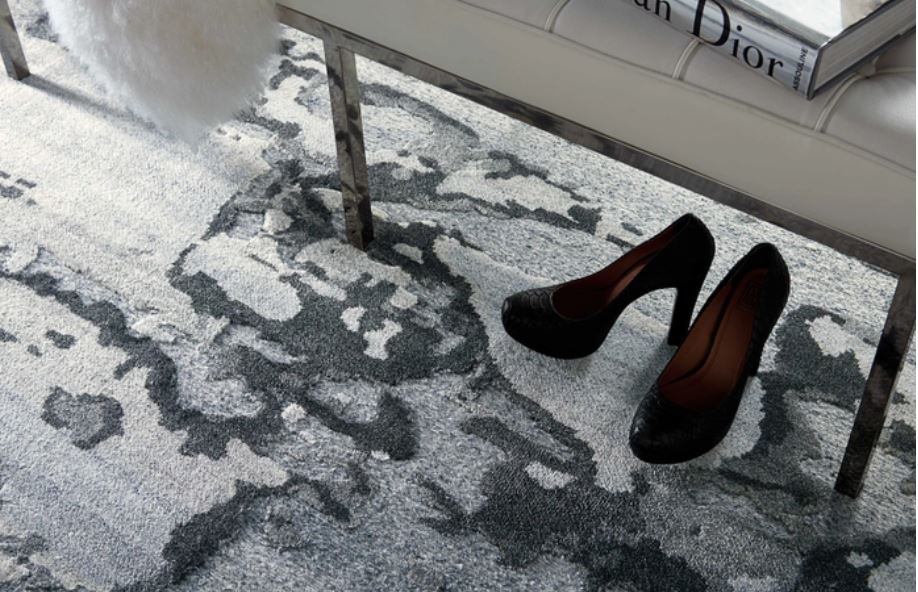
Indoor/outdoor rugs solve this problem without sacrificing style. The category has expanded significantly, and the aesthetic range now includes rugs that look at home in a living room setting. Flatwoven polypropylene in particular has become a legitimate interior design option, not just a practical fallback.
The advantage of a sunroom is that drainage isn’t a concern. This gives you more flexibility on backing type and pile construction. You can go slightly thicker here than you would on an exposed patio without worrying about drying time. The priority is UV resistance and fiber durability over water management.

Entryway and Mudroom Rugs: The Case for Indoor/Outdoor Inside
This is the use case people don’t always think of, and it’s one of the strongest arguments for indoor/outdoor rugs beyond the backyard.
Entryways and mudrooms take the kind of abuse that would ruin most area rugs quickly. Wet boots, tracked mud, salt in winter, and heavy foot traffic daily. An indoor/outdoor rug handles all of it, and it cleans up faster than a standard pile rug. Hosing it down outside or wiping it with a damp cloth is often enough.
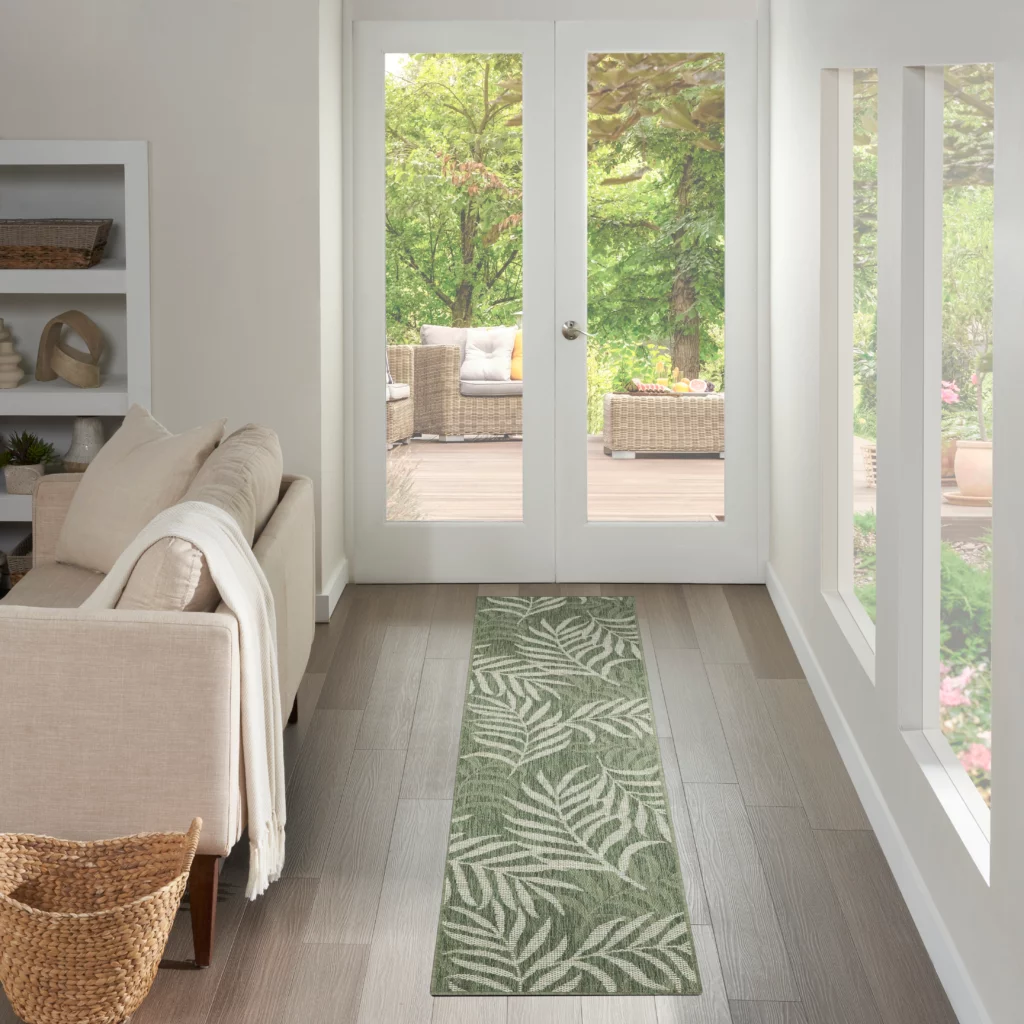
For entryways, a runner or small accent rug (2×3, 3×5) in a tight flatwoven construction is the most practical choice. It lays flat under doors, stays put with minimal or no pad on most surfaces, and wears evenly because the pile is low.
In a mudroom with more square footage, a standard 5×7 or 5×8 fits the typical layout and can do double duty as a catch-all zone near a bench or storage area.
How to Choose the Right Indoor/Outdoor Rug: A Practical Checklist
Before you buy, work through these questions in order:
- Where will this rug live? Fully exposed outdoor spaces need low-pile, fast-drying construction with a synthetic backing. Covered spaces and sunrooms have more flexibility. Entryways and mudrooms need something flat and easy to clean.
- How much sun exposure will it get? Direct, sustained sun exposure requires solution-dyed fiber. It’s the only construction method that won’t fade over time.
- Will it get wet? If yes, you want an open or synthetic backing that allows drainage and a pile construction that dries quickly. Flat-woven or low-pile performance fibers typically dry within a few hours of rainfall.
- What size does the space actually need? Measure the seating footprint, not the full outdoor space. For entryways, measure door clearance first.
- What’s the maintenance situation? All indoor/outdoor rugs are easier to clean than standard area rugs, but a flatwoven construction gives you the most flexibility — shake it out, hose it off, or spot clean as needed.
Q: Are indoor/outdoor rugs durable? A: Yes, and in some ways more so than standard area rugs. Solution-dyed polypropylene and PET fibers resist UV fading, staining, and moisture damage. They hold up to heavy foot traffic and can last several seasons outdoors with minimal care.
Q: What is the difference between indoor and outdoor rugs? A: Indoor rugs are typically made from natural or soft synthetic fibers that prioritize comfort and appearance. Outdoor and indoor/outdoor rugs are made from performance fibers like polypropylene with UV-resistant, solution-dyed construction and synthetic backings that allow for drainage and faster drying times.
Q: Can indoor/outdoor rugs get wet? A: Yes. Rugs made from solution-dyed performance fiber, with a synthetic or open backing are designed to get wet and dry out on their own. They should not sit in standing water for extended periods, but rain exposure is not a problem.
Q: What is the best material for an outdoor rug? A: Solution-dyed performance fiber, specifically polypropylene is the most reliable all-around choice. It resists UV fading, dries quickly, handles stains well, and is available across a wide range of styles and price points. PET, another performance fiber, is a close second and a good choice for buyers who prioritize sustainability.
Q: Do indoor/outdoor rugs work inside the house? A: Absolutely. Indoor/outdoor rugs are a strong choice for entryways, mudrooms, kitchens, and any other space that sees heavy traffic or moisture. The same properties that make them perform outside — easy cleaning, stain resistance, durability — make them practical inside as well.
Q: Can you leave an outdoor rug outside year-round? A: In temperate climates with mild winters, many indoor/outdoor rugs can stay outside year-round. In climates with harsh winters or heavy snow accumulation, it’s better to roll the rug and store it indoors or in a covered space during the off-season. This significantly extends its lifespan.
Indoor/outdoor rugs have come a long way from the utilitarian options that once dominated the category. The material performance is there. The design range is there. The question now is just finding the right match for your space.
Browse the Aloha, Horizon, Tulum, Positano, Garden Oasis, and Essentials collections to see what works for yours.