Freeform Rugs: A Designer’s Guide to Sculptural Shapes
A freeform rug is a rug with an unconventional silhouette, often featuring organic curves, asymmetrical edges, or shapes inspired by nature. Unlike traditional rectangular or circular rugs, freeform designs follow the movement of their patterns, giving designers greater freedom to explore furniture placement, spatial composition, and the relationship between the rug and its surroundings.
This approach to rug design is gaining attention as interiors embrace sculptural furniture, fluid architecture, and expressive forms. At Fall 2026 High Point Market, we introduced FORME by Alexander P., a new designer brand exclusive to Nourison Home. Inspired by flowers, foliage, water, and natural landscapes, the collection explores how rugs can become sculptural elements within an interior.
What Makes a Freeform Rug Sculptural?
A freeform rug becomes sculptural when its silhouette, pattern, and surface texture work together to suggest depth and movement. Rather than containing a design within a conventional border, its outer edges follow the composition itself.
These rugs often take inspiration from natural forms, including overlapping leaves, flowing water, and irregular stone formations. Their asymmetrical outlines can soften angular architecture, complement curved furniture, or interrupt the symmetry of a traditional seating arrangement.
In FORME by Alexander P., designer Alexander Peykar explores these relationships through 12 hand-tufted designs.
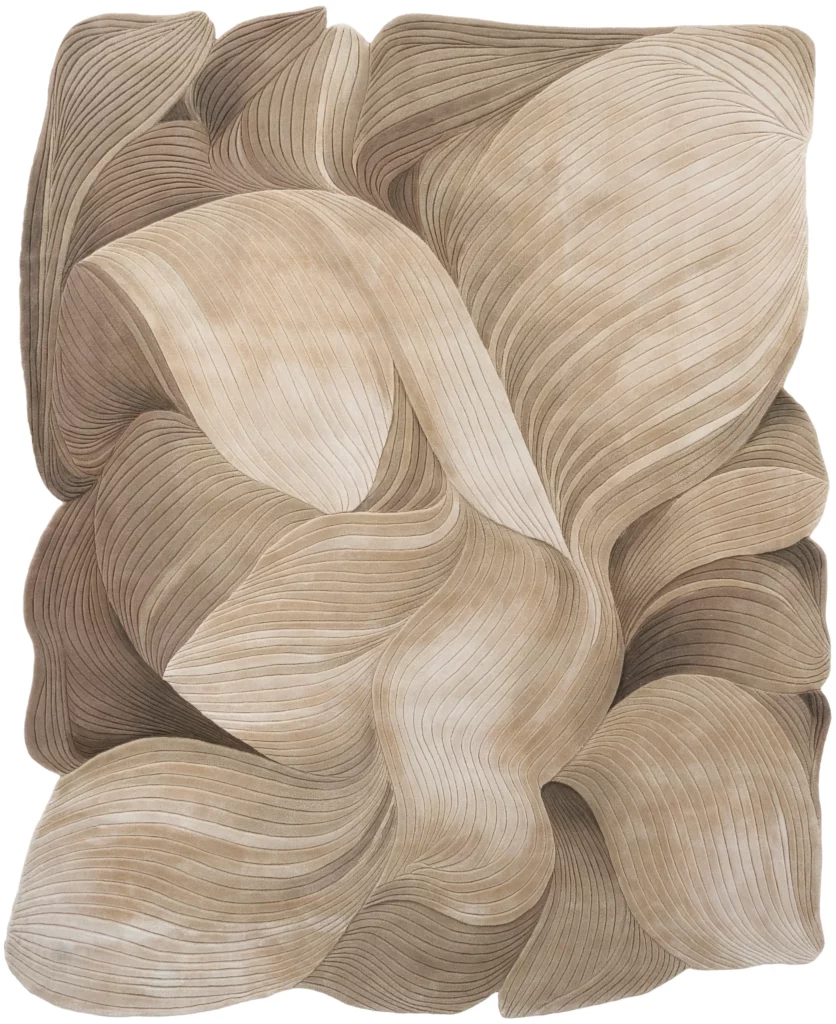
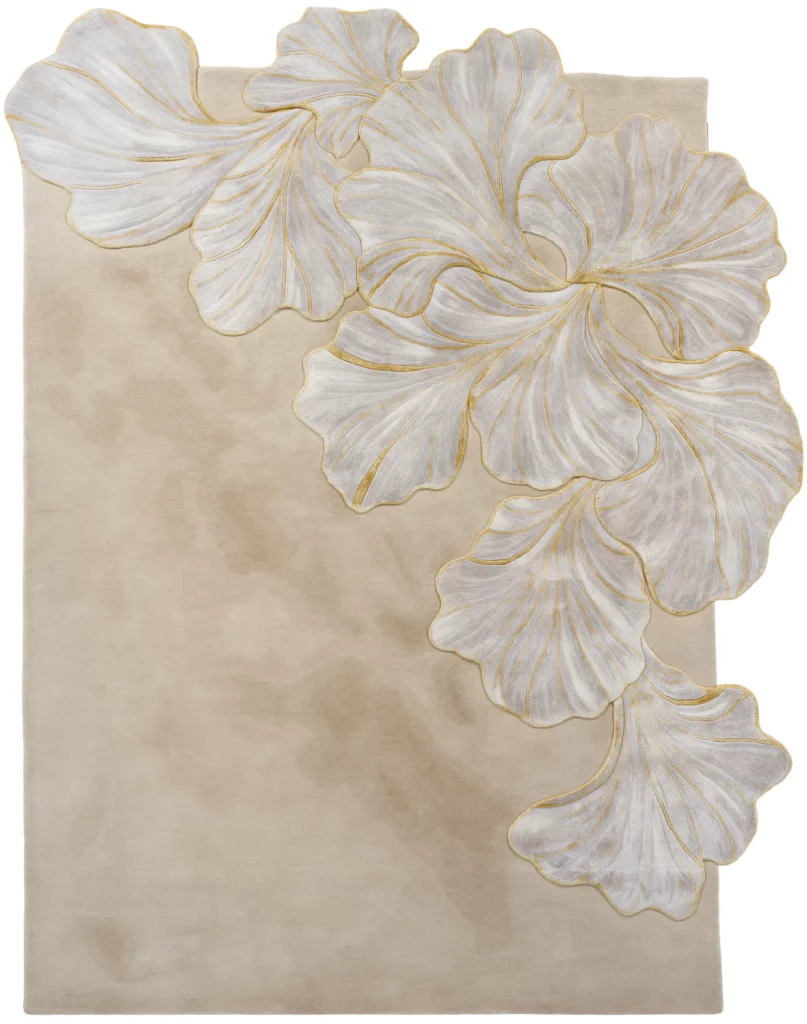
Folio, for example, draws inspiration from overlapping leaves. Broad, interlocking forms unfold in ivory, silver grey, and taupe, with carved lines following the direction of each leaf. Its organic silhouette feels particularly suited to contemporary interiors with sculptural seating and simple architectural finishes. Floralia offers a more expressive interpretation of botanical design. Oversized floral forms extend beyond the central composition, creating an irregular shaped rug whose perimeter follows the movement of the petals. Its sculpted surface and subtle gold accents lend themselves to interiors with curved upholstery, warm metallic finishes, and contemporary decorative influences.
How Do You Style Freeform Rugs in Interior Spaces?
Freeform rugs offer designers opportunities to reconsider how furniture occupies a room. Their irregular outlines can introduce movement, define unconventional seating arrangements, or establish a focal point without relying on a centered rectangular layout.
The key is allowing the rug’s shape to contribute to the composition rather than concealing it beneath furniture.
Complement sculptural furniture with organic shapes
Curved sofas, rounded lounge chairs, and kidney-shaped coffee tables naturally complement freeform rugs. Their silhouettes establish a visual relationship without requiring every curve to align.
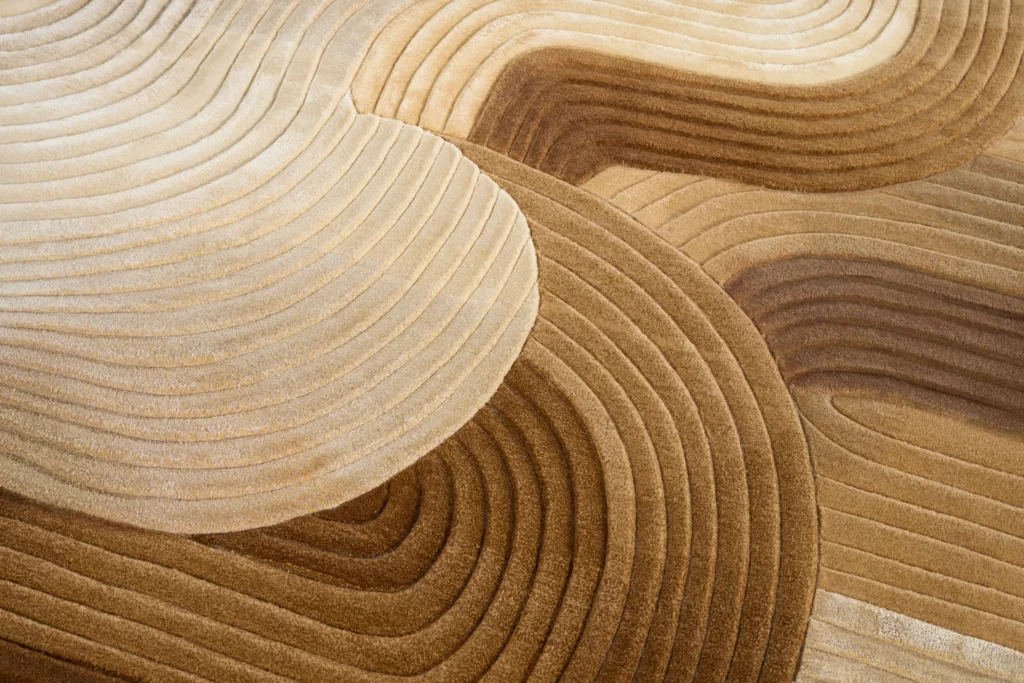
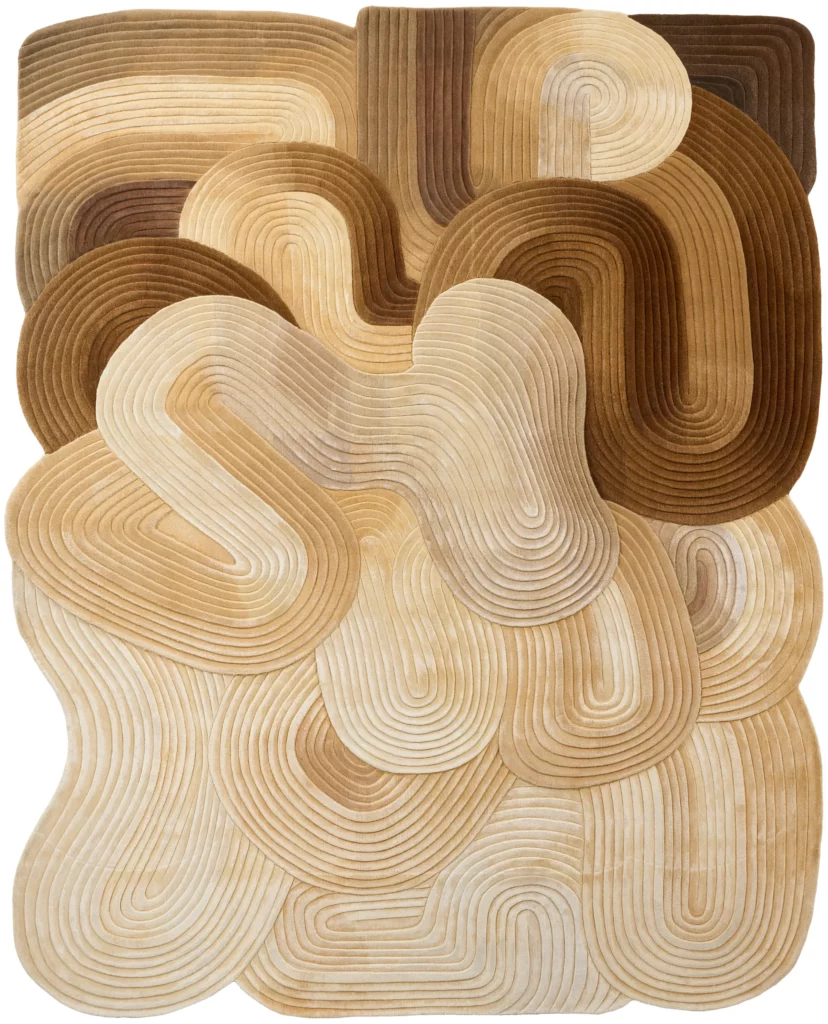
In a Brazilian Modernist-inspired living room, Contour provides an interesting foundation for low-slung wood furniture, sculptural armchairs, and natural materials. Its overlapping ivory, stone, and taupe forms recall rounded rocks, echoing the organic geometry associated with this design style.
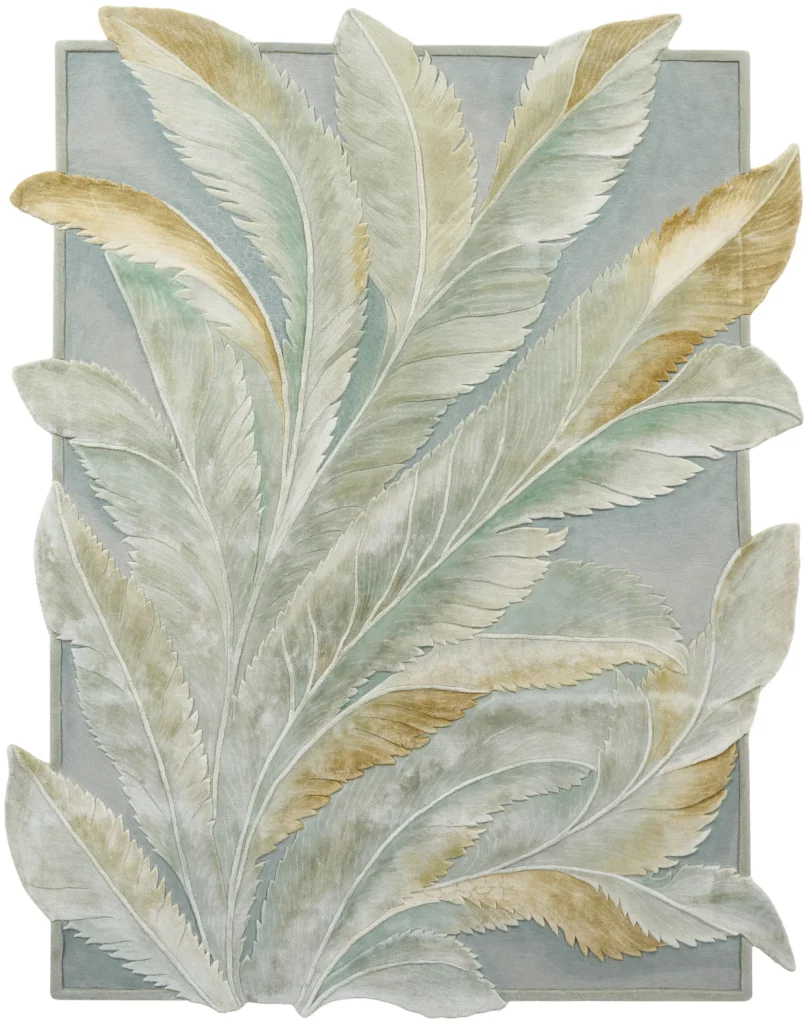
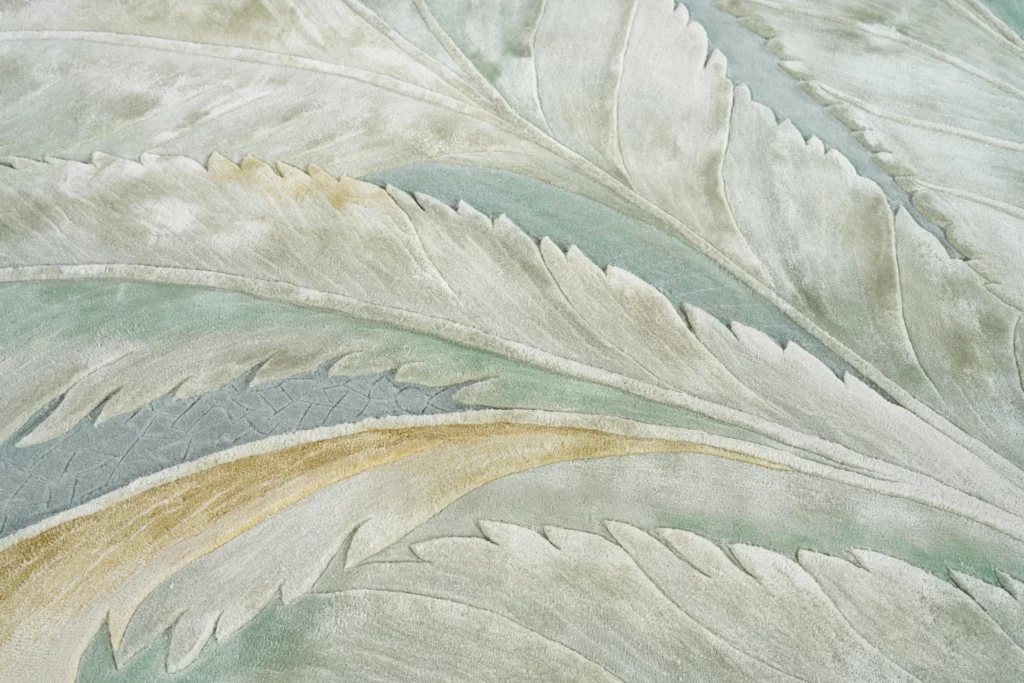
Plume takes a softer direction. Its elongated, feather-inspired forms create a flowing silhouette that pairs well with curved upholstery, warm wood, and brushed metal finishes. A low-profile coffee table would allow more of its sculpted surface to remain visible.
Use asymmetry to rethink furniture placement
Traditional rectangular rugs often encourage symmetrical arrangements, with sofas, tables, and chairs positioned around a central axis.
A freeform rug allows for a less rigid approach.
Consider placing a curved sofa along one portion of the rug, with a lounge chair positioned at an angle toward an extending edge. Rather than centering every piece, let the rug’s silhouette guide the arrangement.
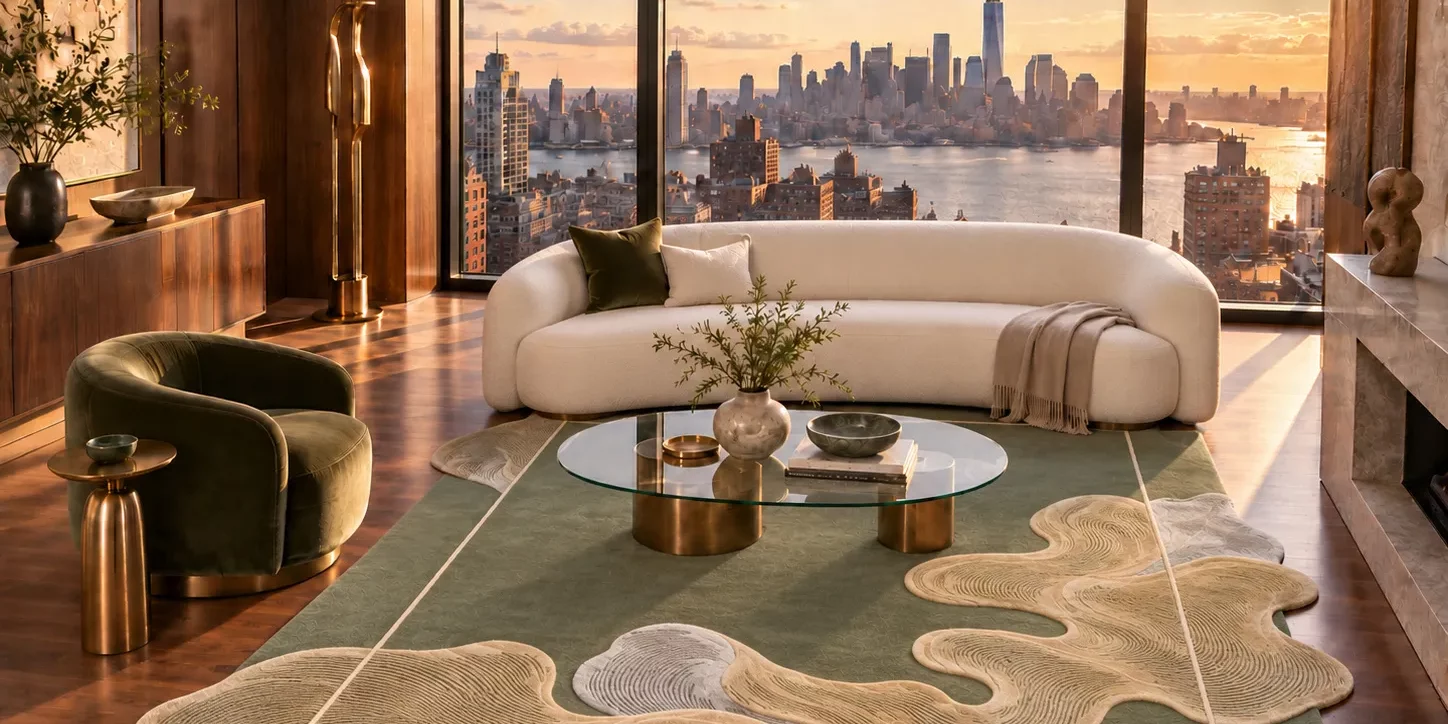
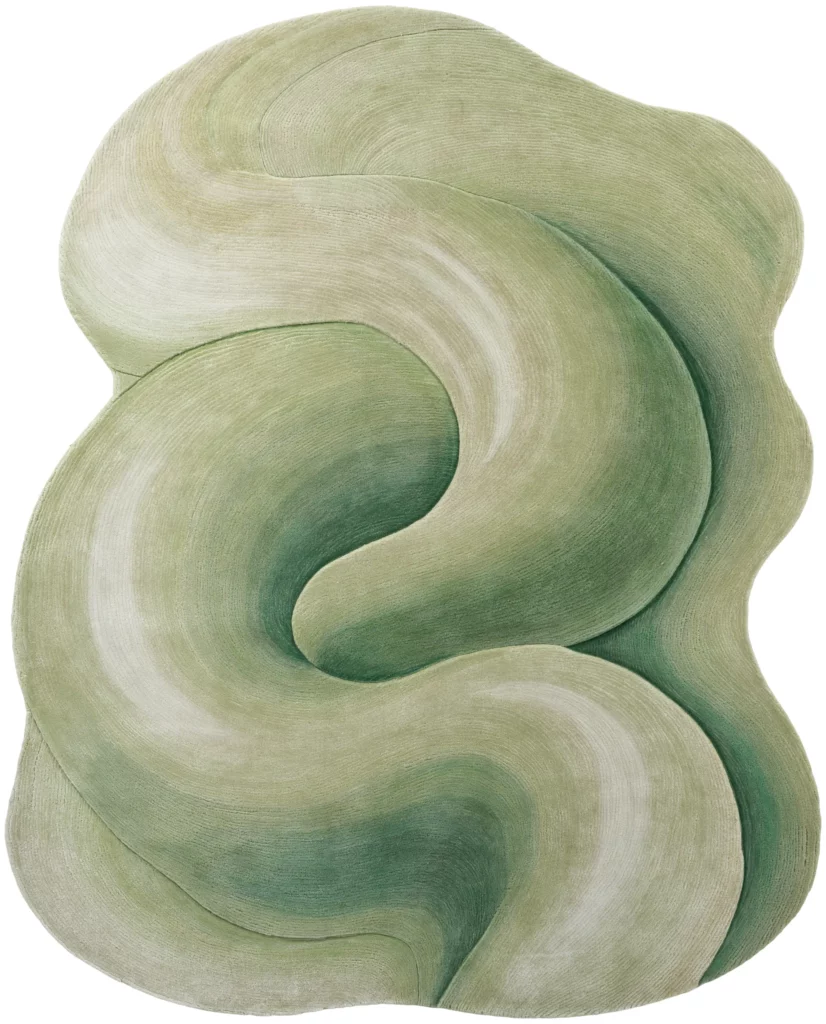
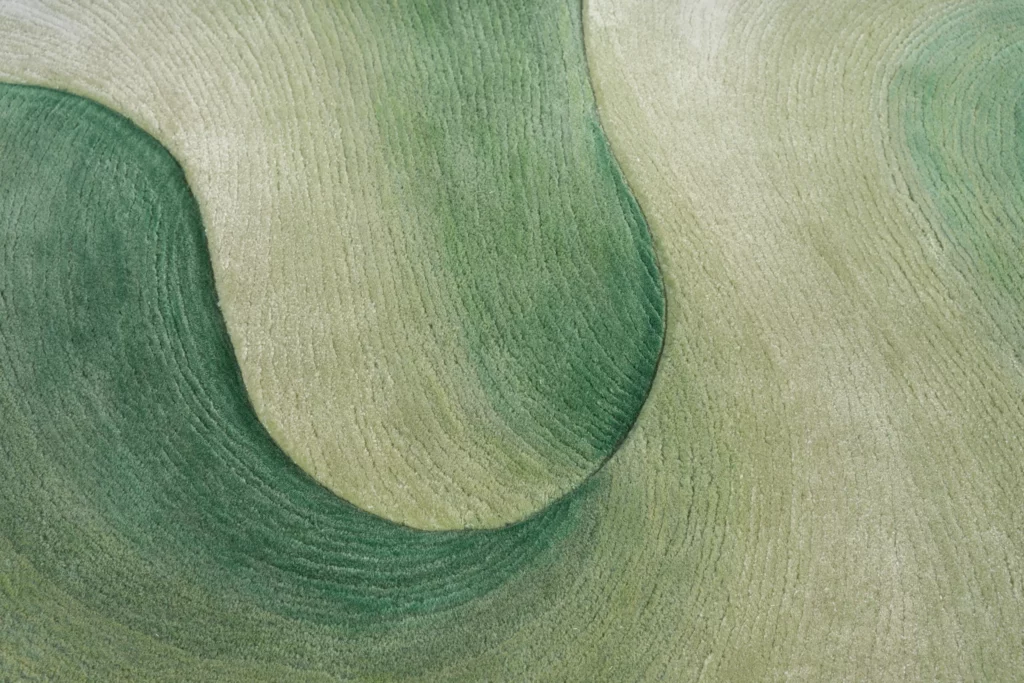
Serpentine illustrates this approach particularly well. Its winding green and ivory ribbons create a continuous movement across the floor, making it suitable for open-plan living rooms where an asymmetrical rug can visually connect separate seating elements.
Leave enough of the perimeter exposed to preserve the design’s distinctive shape.
Bring freeform rugs into Neo Deco and expressive interiors
Freeform rugs also complement Neo Deco interiors, where sculptural furniture, polished finishes, and curved architectural details create a decorative but contemporary atmosphere.
In these spaces, the relationship between competing shapes becomes especially important. A rug with pronounced curves can complement rounded furniture, while a more restrained palette allows decorative lighting, lacquered surfaces, and expressive upholstery to take prominence.
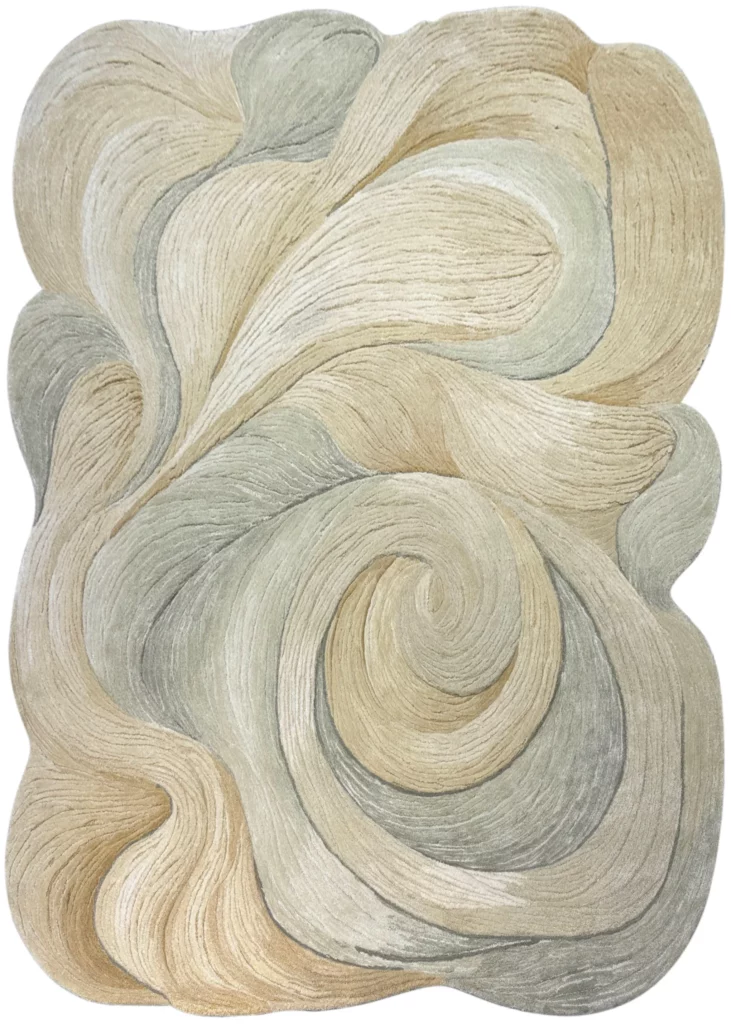
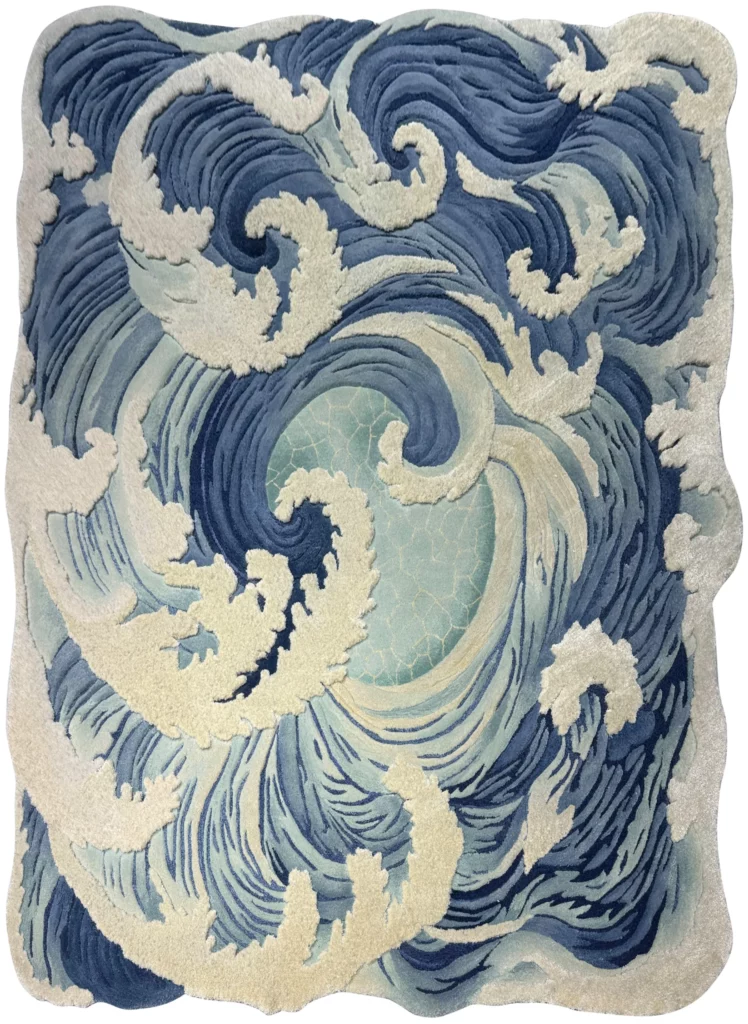
Aureole features layered curves in ivory, grey, and muted gold that recall unfolding petals. Its organic outline works particularly well alongside rounded sofas, polished accent tables, and sculptural lighting. For interiors that embrace bolder color and movement, Crest offers another direction. Its rolling blue forms and textured ivory curves evoke waves in motion, with pronounced carving that gives the composition a strong visual presence.
How Do Hand-Tufting and Carving Create Sculptural Dimension?
The sculptural character of a freeform rug depends on more than its outline. Construction and finishing techniques determine how the design translates into texture, depth, and surface relief.
FORME rugs are hand-tufted from New Zealand wool and silky nylon, with carved details that emphasize the contours of each composition.
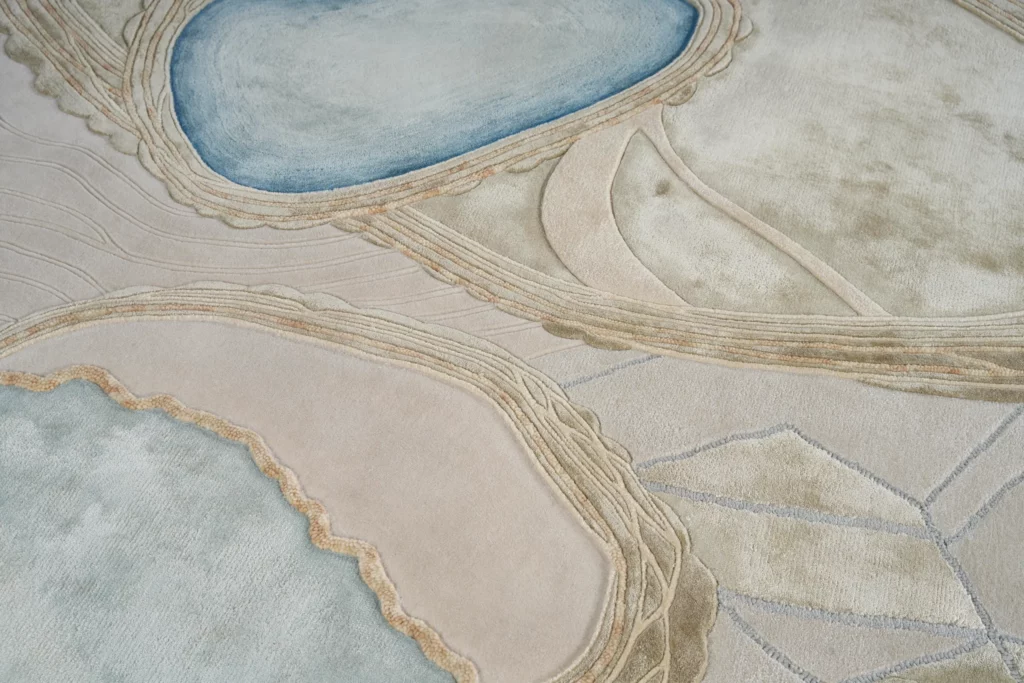
Hand-tufting involves inserting yarn into a foundation using a tufting tool, allowing artisans to create intricate patterns and varied shapes. After tufting, carving techniques are used to sculpt the pile, creating recessed channels and raised sections.
New Zealand wool contributes a substantial, soft surface, while silky nylon introduces subtle sheen. Together, the fibers create tonal variation as light moves across the sculpted design.
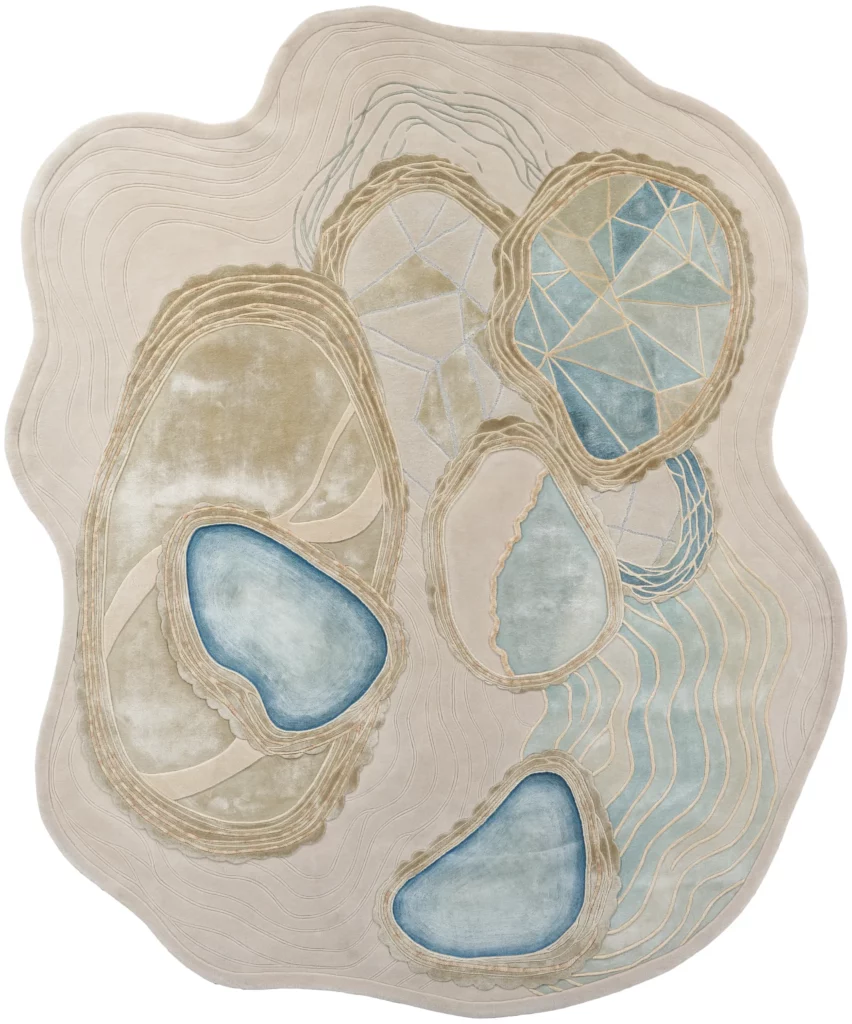
Lagoon demonstrates this approach through rounded pools of blue surrounded by ivory, sage, and stone. Carved contours reinforce the impression of water settling into a natural landscape.
For designers specifying a hand tufted wool rug, these construction details help explain why two designs with similar color palettes can have very different visual effects.
Explore our guide to wool rugs for more information about the fiber’s characteristics.
Where Do Freeform Rugs Work Best?
Freeform rugs are especially effective in interiors where their silhouette can remain visible and contribute to the room’s layout.
Living rooms: Position the rug beneath a seating arrangement while allowing its curved edges to extend beyond the furniture. Avoid covering the most distinctive sections with oversized coffee tables.
Bedrooms: Consider placing an organic shaped rug slightly off-center beneath the bed or using a smaller freeform design to define a reading corner with a lounge chair.
Entryways and gallery-like spaces: An irregular silhouette can establish a focal point without a large furniture grouping. In these areas, circulation space and door clearance should guide the rug’s dimensions.
Open-plan interiors: A freeform rug can distinguish a seating area from adjacent dining or circulation zones without introducing another straight architectural boundary.
Pile height and furniture movement should also be considered during specification. Our guide to choosing the best rug pile for each room explores these practical considerations.
Can Freeform Rugs Be Customized in Shape, Size, and Color?
Yes. Freeform rugs are particularly well suited to custom design because their silhouettes can respond to specific architectural conditions, furniture arrangements, and project dimensions.
FORME by Alexander P. is made to order, with customizable shapes, sizes, and colorways.
Designers can adapt a design to suit the proportions of a room, coordinate its palette with upholstery and finishes, or specify an unconventional outline that accommodates unique architectural features.
The custom process allows for detailed color development using Pantone references and matched wool and nylon yarn samples.
For additional guidance on specifying made-to-order designs, explore our custom rugs guide.
Exploring the Art of Freeform Rugs with FORME
Freeform rugs invite a different approach to interior composition. Their outlines can follow the curves of furniture, soften architectural boundaries, or establish an unexpected focal point within a room.
With FORME by Alexander P., we explore these possibilities through natural inspirations, hand-tufted construction, and customizable silhouettes that allow designers to bring their own vision to each project.
Discover the complete FORME by Alexander P. collection and explore the possibilities of sculptural rug design.
Frequently Asked Questions About Freeform Rugs
Q: What is a freeform rug?
A freeform rug has an unconventional silhouette rather than a standard rectangular, square, or circular outline. Designs may feature organic curves, asymmetrical proportions, or shapes inspired by nature. These rugs allow the outline of the design to become part of the room’s composition. Freeform rugs are frequently used in contemporary interiors that emphasize sculptural furniture and fluid forms.Q: What is the difference between a freeform rug and an irregular shaped rug?
The terms are closely related and often used interchangeably. Freeform rugs generally describe designs with fluid, unconventional silhouettes, while irregular shaped rugs is a broader term that can include angular, geometric, or asymmetrical outlines. A wavy rug, for example, may be considered a type of freeform rug when its undulating edges contribute to the overall design.Q: How do you style a freeform rug?
Begin by considering how the rug’s silhouette relates to the surrounding furniture. Curved sofas, rounded chairs, and sculptural tables can complement its organic outline, while angular furniture creates a stronger contrast. Allow portions of the rug’s perimeter to remain visible, and avoid forcing the arrangement into a perfectly symmetrical layout. In highly decorative interiors, a tonal freeform rug can provide a quieter foundation.Q: Can freeform rugs be made in custom sizes and colors?
Yes, depending on the manufacturer and collection. FORME by Alexander P. offers made-to-order freeform rugs with customizable shapes, dimensions, and colorways. This allows designers to adapt a design to architectural requirements, furniture placement, and an established interior palette. Custom specifications are developed through the ordering process.