Fall Decor: The Trends, and the Rugs That Carry Them
Earthy reds, espresso browns, high-contrast neutrals, wool and silk underfoot, and layered throws in place of bulky seasonal props. The quickest way to move a room into the season is the rug. It covers the most floor, so it sets the color range the rest of the room has to work within. Search interest in fall decorating climbs every August and holds through October, and one of the most common things people type is simply when to start. You do not need a full seasonal overhaul to answer that. A change of rug, a few throws, and a shift in your color story do most of the work.
What colors are trending for fall?
The fall palette runs warm and a little moody: brick and terracotta reds, chocolate and espresso browns, ochre and mustard, set against greige and charcoal neutrals. There are two honest ways to wear it, depending on how much color you want in the room.
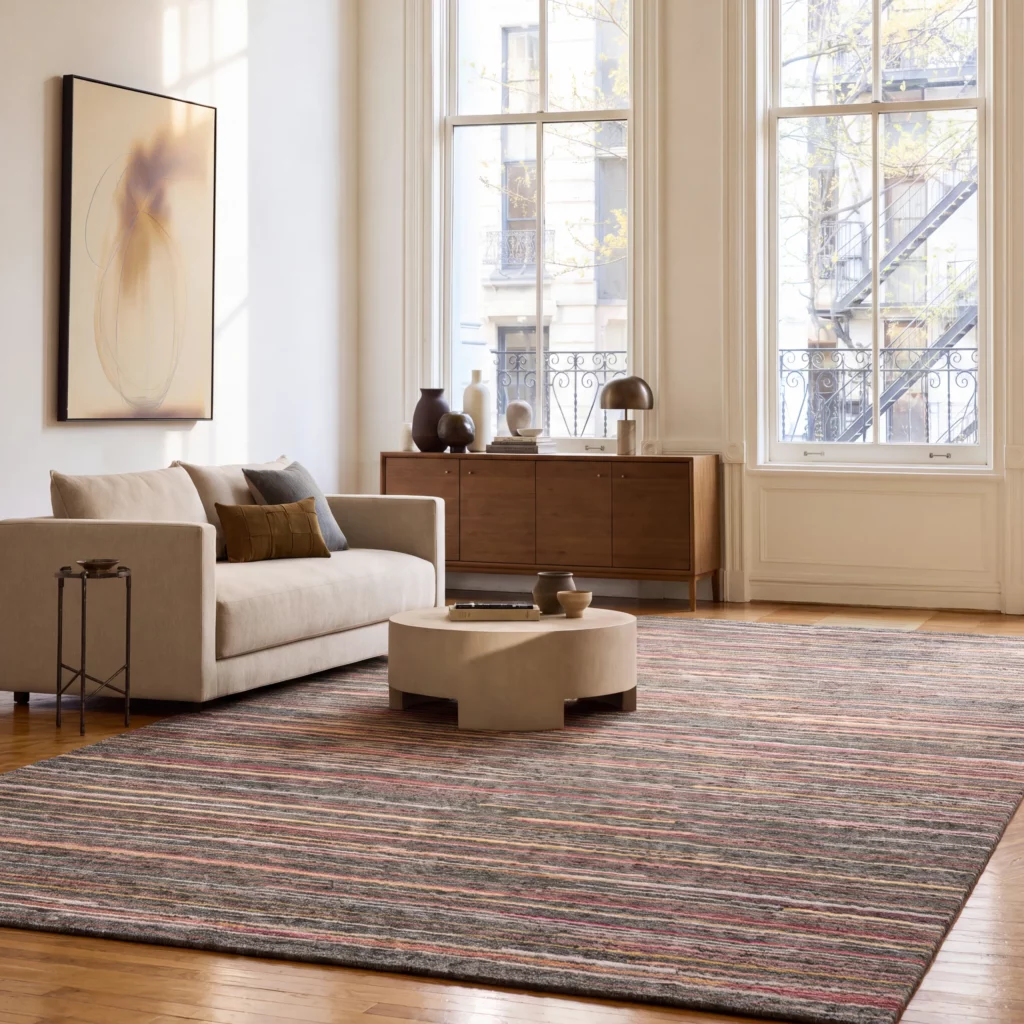
For color you can read across the room, use a rug that carries the whole range. The Plateau PAE01 Grey/Flame does exactly that: a soft grey ground threaded with slender flame-red stripes, drawn from Tibetan rugs and hand-knotted from a wool and rayon blend. The stripes shift as the light moves, so the floor never reads flat.
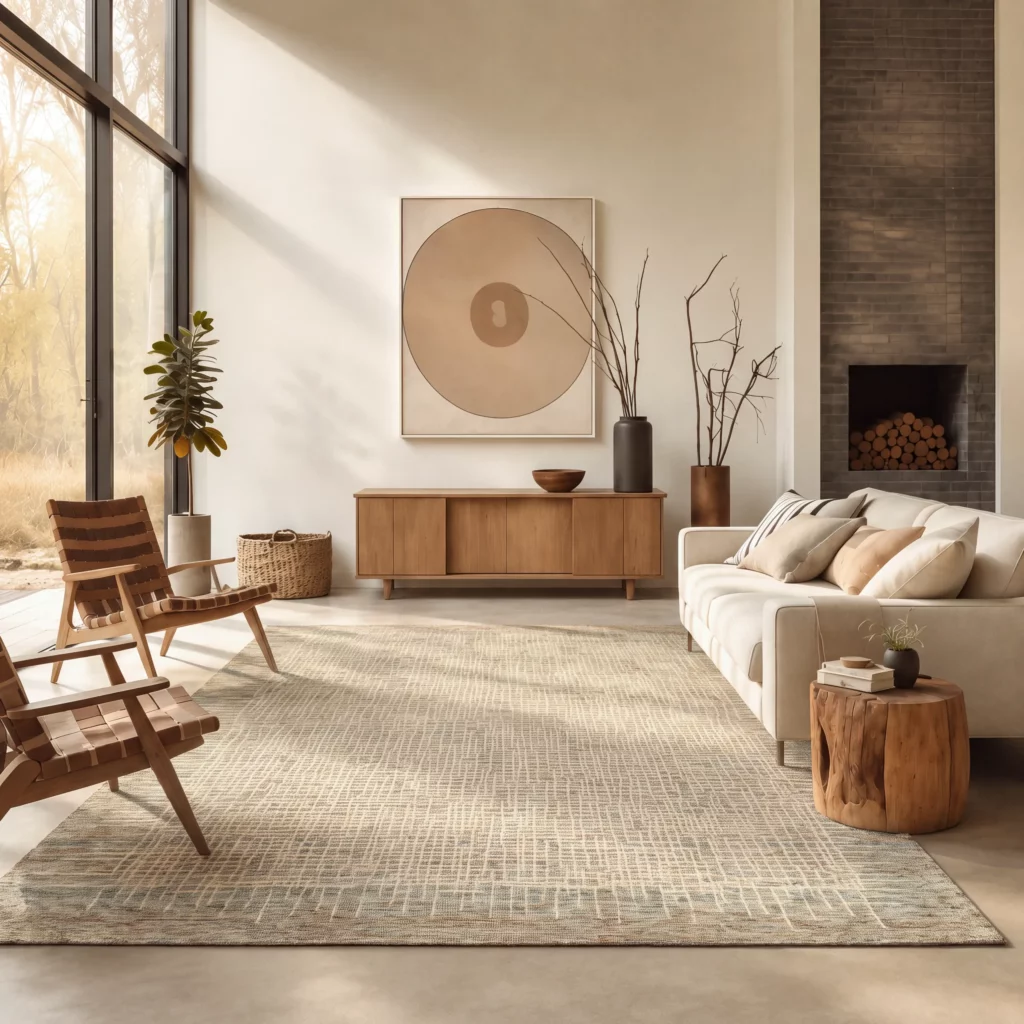
For a quieter version of the same idea, the Colorado CLR03 Beige Multicolor keeps the warmth but lowers the volume. It is hand-tufted from 100% wool in a loop pile, with creamy beige, faded denim, and soft rust running through it, like a straw mat rewoven in autumn tones. One rug shouts the season; the other hums it. Both fit the direction.
How do you make a room feel warmer without making it dark?
Warmth in a fall room comes from material and texture as much as color. Wool holds heat, softens sound, and springs back underfoot. Silk and silk-like fibers catch light and add a sheen that a flat synthetic cannot.
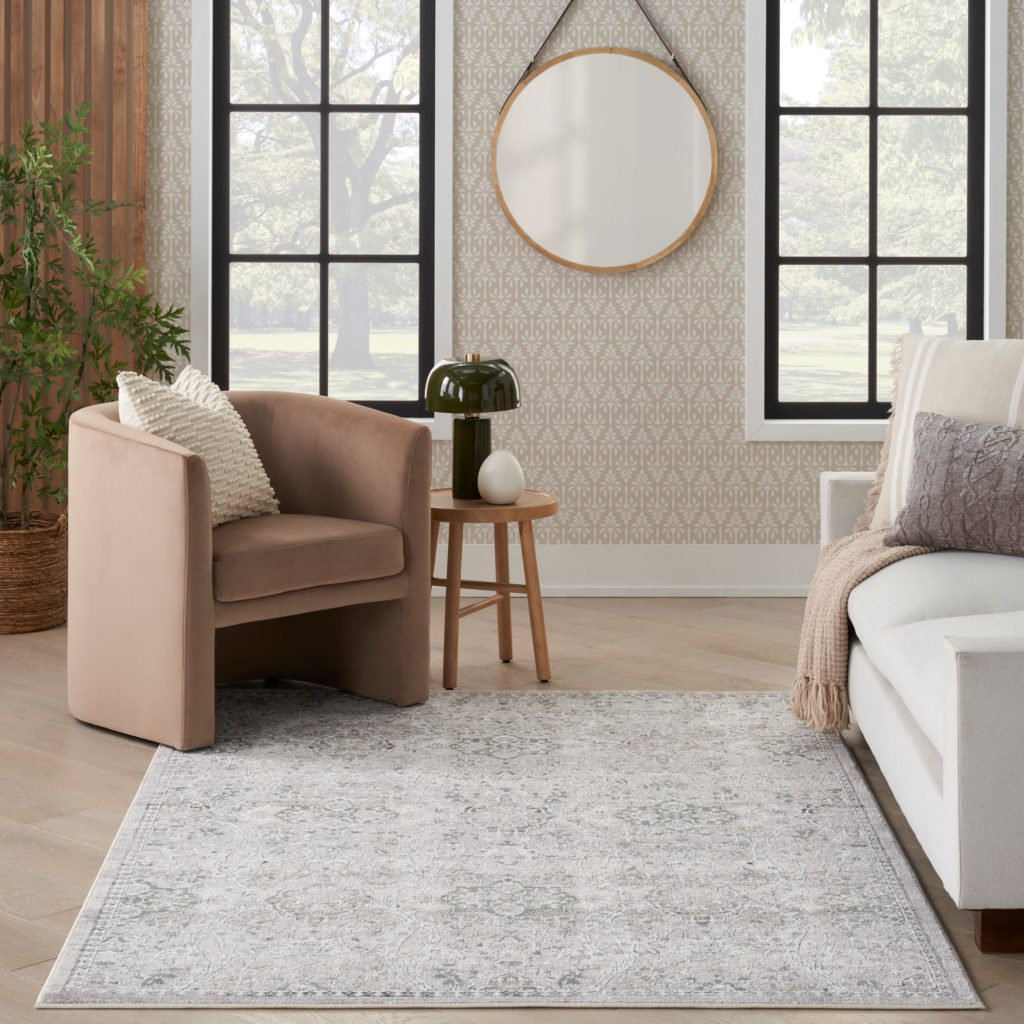
This is where fiber choice earns its keep. The Ravello RVL02 Ivory Grey uses a high-low wool pile so its Persian-inspired floral medallion sits in relief, catching shadow instead of lying flush. It is a low-shedding, low-traffic piece, better suited to a formal sitting room or a bedroom than a busy family floor.
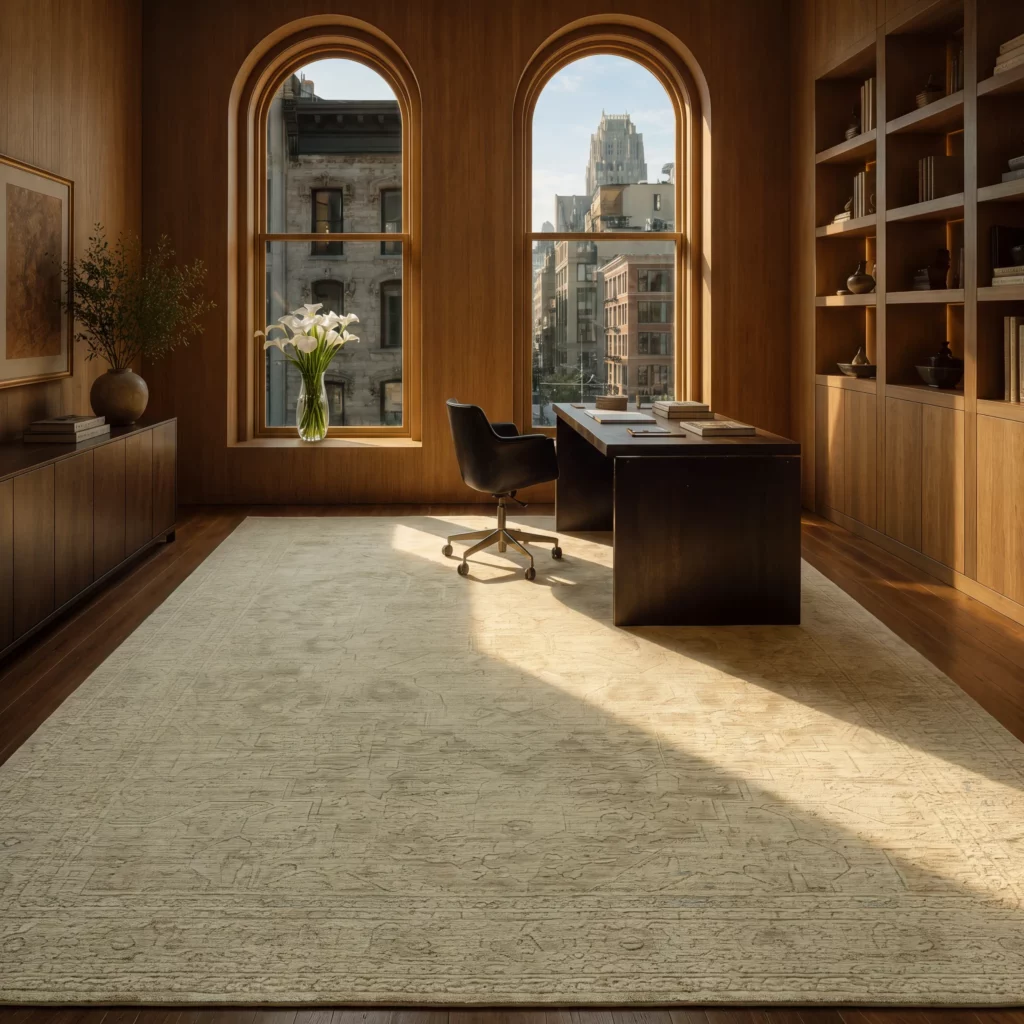
For more presence, the Christopher Guy Wool & Silk CGS04 Ecru pairs New Zealand wool with silk in a hand-knotted Tibetan weave, graphite and brown pulled across an ecru field. The silk content is what gives it that low shine under lamplight.

Worth naming the trade-off here, because it drives most fall rug decisions. Wool costs more and sheds for the first three to six months, then settles down. Polypropylene is cheaper and often washable, but it sits flatter and does not insulate the way wool does. For a room you want to feel warm from October on, wool is the fiber that pays you back. We go deeper on care, longevity, and cost in everything about wool rugs, and you can browse the full Wool Rugs collection if that is the direction you are leaning.
Do traditional and vintage rugs still work for fall?
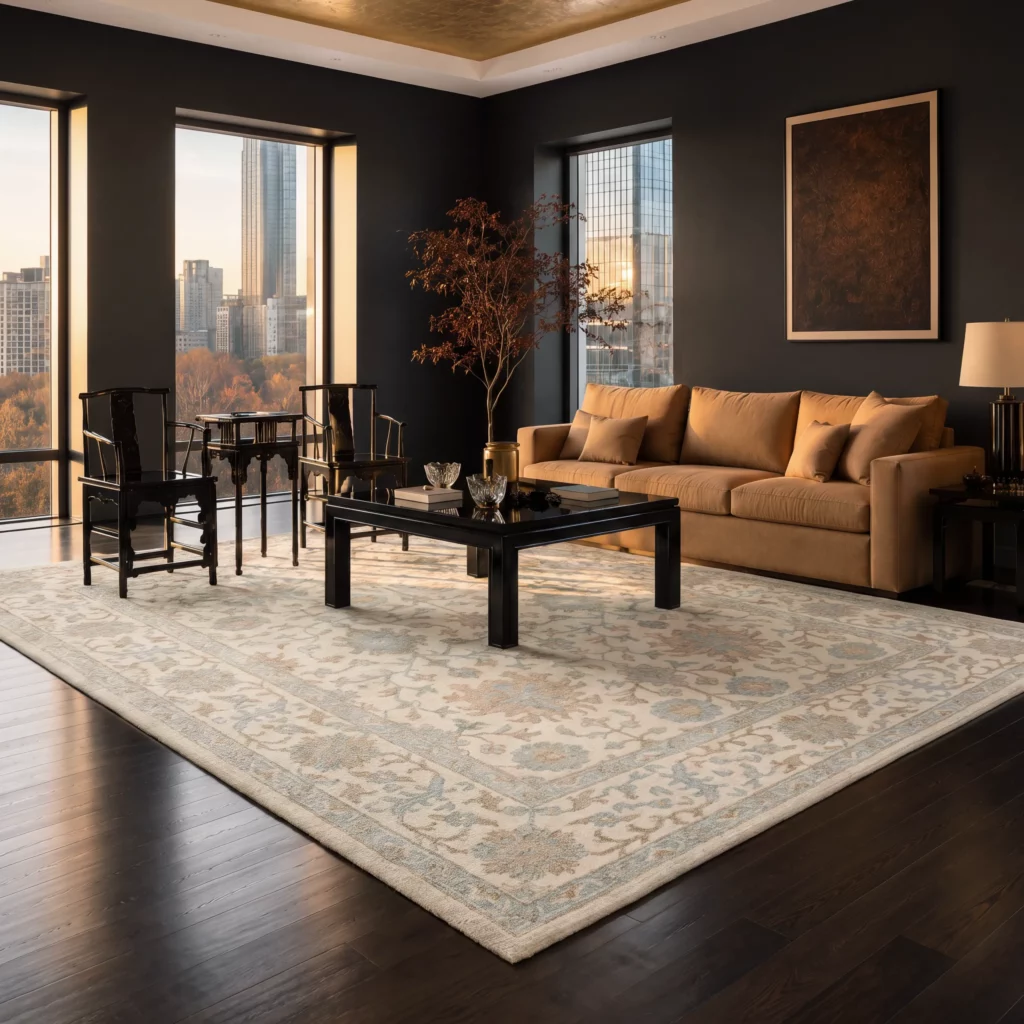
Yes, and they may be the easiest fall rugs to live with. Persian and Oushak patterns read as autumn almost on their own, because their palettes were built from madder red, indigo, walnut, and undyed ivory long before anyone called it a seasonal trend. The Celia CIA01 Ivory shows the softer end of that. Oushak-style florals in a pale ivory, hand-tufted from a wool and rayon blend and framed by a narrow border, it brings the pattern without the heaviness some traditional rugs carry into a modern room.
For something warmer and more antique in feel, the Aldora ALD03 Opal/Grey runs a design of intertwining leaves and vines through grey, ivory, and brown, hand-knotted from a bamboo-extruded silk-like fiber and finished with fringe. It is rated for heavy foot traffic, so it holds up in a real living room, not just a showpiece one.
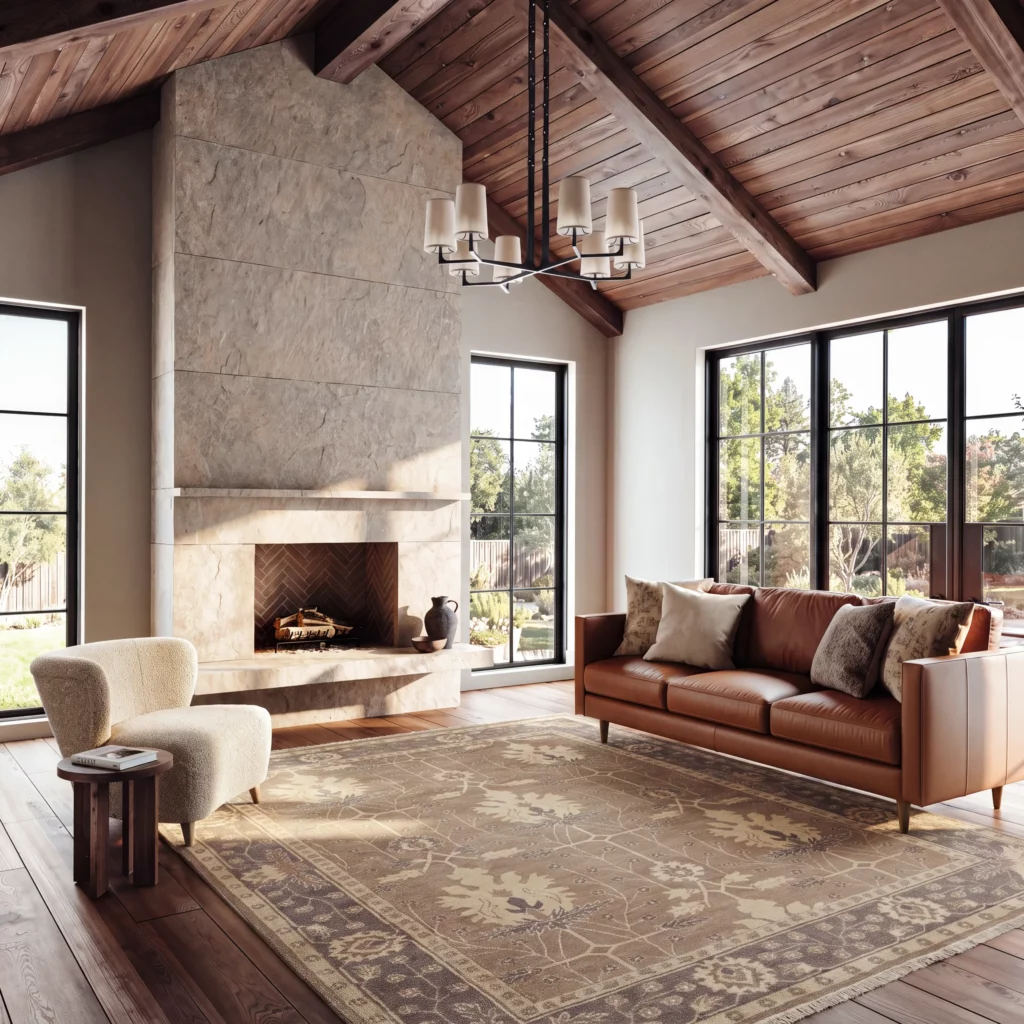
Construction is the other thing to weigh. Aldora, Plateau, and the Christopher Guy rug are all hand-knotted, tied by hand one knot at a time over months, which is why they carry the prices they do and why they last for generations.
Celia, Ravello, and Colorado are handmade too, but tufted or hand-loomed, which is quicker to produce and brings the cost down without giving up the wool. If you are deciding where to spend, are hand-knotted rugs worth it breaks down the difference in plain terms.
How do you layer a living room for fall without cluttering it?
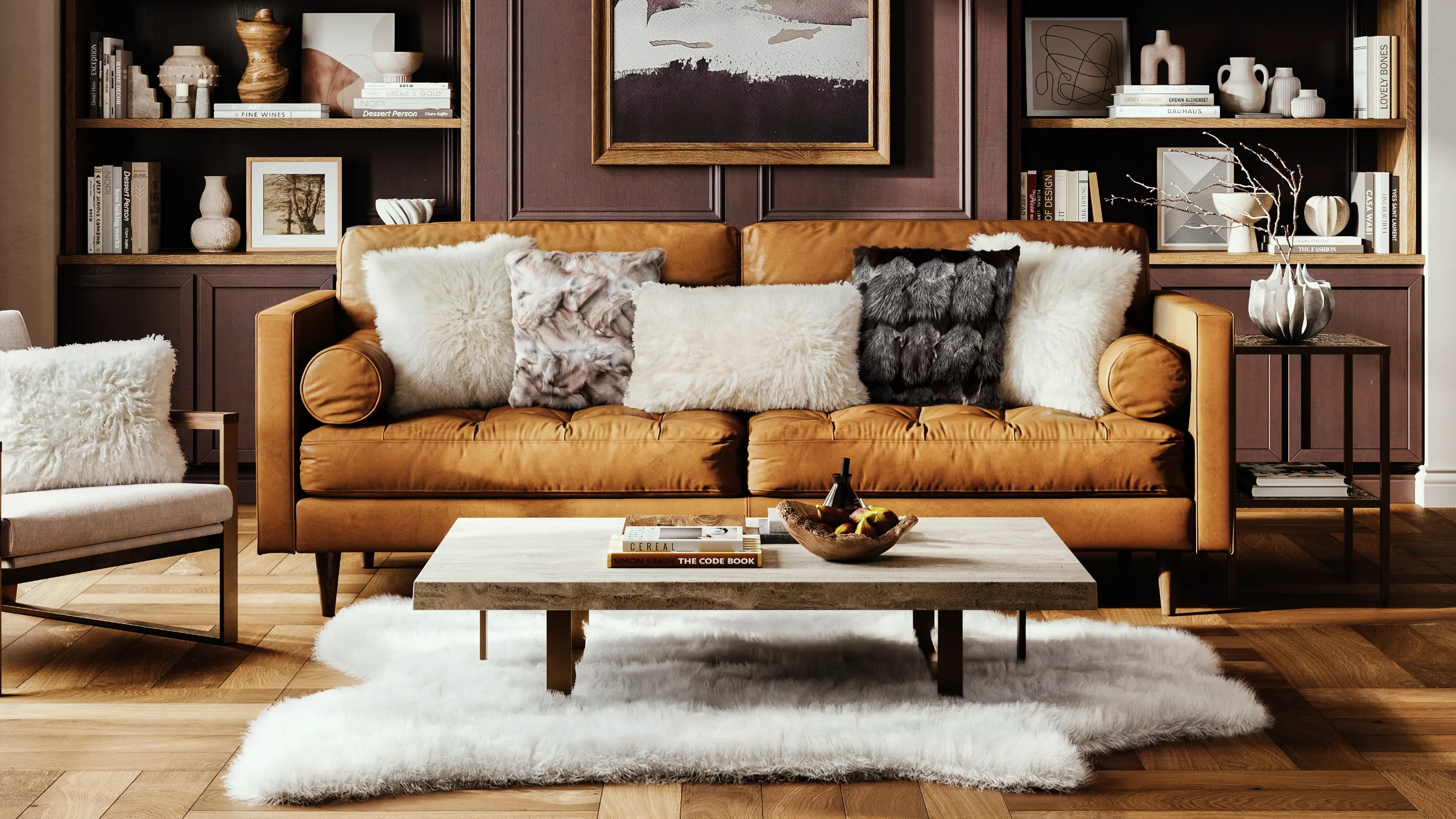
Layer up, not out. Keep the floor to one well-sized rug, then build the softness on the furniture with throws and pillows you can change by season. The Mina Victory Faux Fur Collection is made for this: throw blankets at 50″ x 60″ and pillows in ivory, cream, and charcoal that read as fall against a leather or linen sofa. Fold one over an arm, stack two pillows at one end, and you have shifted the room’s feel without touching the floor.
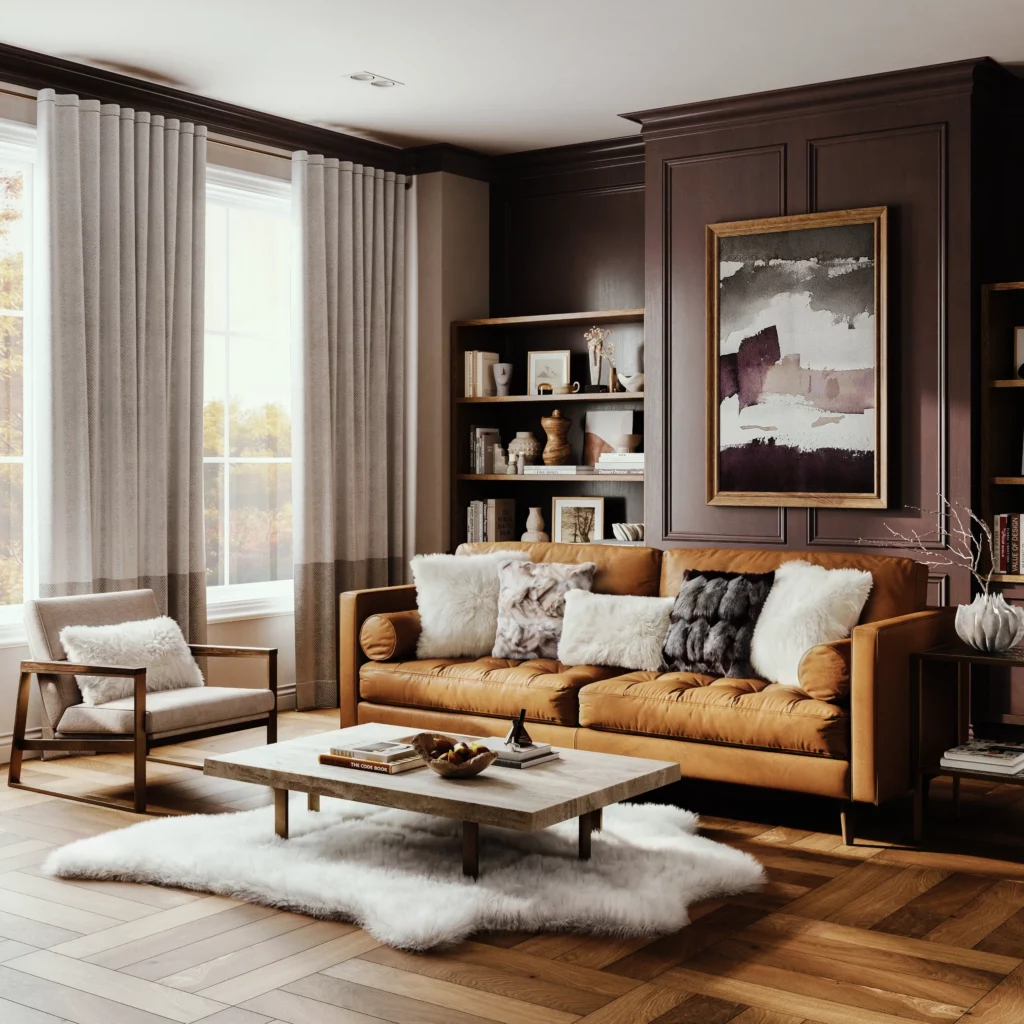
Two practical notes before the traffic of the season picks up. A rug pad under a wool or hand-knotted rug keeps it from creeping on hard floors and adds cushion that makes the pile last longer. And heavier fall use means more tracked-in grit and leaves, so a light routine goes a long way. Vacuum with suction only, no beater bar, and spot-clean spills as they happen. Our guide to cleaning rugs at home covers the rest.
How to bring this home
- Start with the rug. Set your fall color range on the floor first, then pull the room toward it.
- Choose fiber for feel. Wool or wool and silk for warmth; reserve a flat synthetic for spots that need washability.
- Match the rug to how you want color to land. Multicolor when you want to notice it (Plateau, Colorado), tonal when you want a calm base (Ravello, Celia).
- Layer on the furniture, not the floor. Throws and pillows change the season; a second rug just adds clutter.
- Add a rug pad and start a light vacuum habit before foot traffic climbs.
FAQ
Q: When should you decorate for fall? Most people start in late August or early September, once the temperatures ease. There is no fixed date; cooler evenings and the first turning leaves are the usual cue. Rugs and textiles are the easiest first swap, because they shift the room without committing you to heavier seasonal props in August.
Q: What kind of rug is best for a living room? For a main living room, a wool or wool-blend rug in an 8′ x 10′ size or larger handles daily traffic and feels warm underfoot. Size it so at least the front legs of your seating sit on the rug. High-low and hand-knotted constructions add texture that reads especially well in low fall light.
Q: Do wool rugs shed, and how do you stop it? New wool rugs shed most in the first three to six months, then stabilize. Vacuum once or twice a week using suction only, with no beater bar, to clear loose fibers without pulling the pile. Shedding is normal and slows on its own; it is not a sign of a flawed rug.
Q: Are hand-knotted rugs worth it for a living room? Hand-knotted rugs like Aldora and Plateau are tied by hand over months and can last for generations, which suits a room you plan to keep for years. If budget is the priority, a handmade tufted or hand-loomed wool rug such as Colorado or Celia gives you similar warmth and pattern for less.