Specifying Commercial Rugs for High-Traffic and Hospitality Spaces: What to Check on a Spec Sheet
The best commercial rugs are selected for the demands of their location, not appearance alone. A hotel corridor, guest room, and busy lobby place different demands on flooring. Before specifying a rug, designers should review its traffic recommendation, approved application, construction, fiber content, pile, backing, and maintenance requirements.
A specification sheet helps turn those details into an informed decision. It also identifies where additional testing, installation guidance, or manufacturer confirmation may be needed.
- What Does a Rug’s Traffic Recommendation Mean?
- Is the Rug Approved for Hospitality or Commercial Use?
- How Does Rug Construction Affect Performance?
- Which Rug Fibers Work Best in High-Traffic Areas?
- Why Do Pile Type and Height Matter?
- What Should Designers Know About Rug Backing and Shedding?
- How Should Cleaning Instructions Influence a Specification?
- When Is Custom Sizing Necessary?
- What Should a Complete Commercial Rug Specification Include?
- Frequently Asked Questions
What Does a Rug’s Traffic Recommendation Mean?
A traffic recommendation describes the level of foot traffic a rug is intended to accommodate. Residential descriptions such as light, moderate, and heavy traffic provide useful guidance, but they do not automatically establish commercial suitability.
A guest room may experience relatively controlled foot traffic, while a hotel lobby handles luggage, frequent furniture movement, and guests arriving throughout the day. Corridors face repeated traffic along the same paths.

What to check: Look for an explicit traffic recommendation and confirm whether it applies to the proposed commercial setting. If the specification only lists residential use, request clarification before proceeding.
Is the Rug Approved for Hospitality or Commercial Use?
An indoor rating does not necessarily mean a rug is suitable for hospitality projects. Application approval should be stated separately, particularly for spaces with demanding maintenance schedules or building-specific requirements.
This distinction matters when comparing hotel rugs for guest rooms against flooring intended for corridors or public gathering areas. A rug suitable for a private suite may not be approved for a busy entrance.
What to check: Confirm the approved application, any commercial performance classification, and required test documentation. Fire-performance and other code requirements should be reviewed for the complete installation and applicable jurisdiction.
How Does Rug Construction Affect Performance?
Construction influences how a rug wears, feels underfoot, and responds to repeated use.
Hand-knotted rugs: Individual knots form the pile, allowing for detailed patterns and substantial construction. Performance still depends on fiber, density, pile structure, and the intended application.
Hand-tufted rugs: Yarn is inserted into a foundation, allowing custom patterns and textures. Designers should also review the backing system and maintenance instructions.
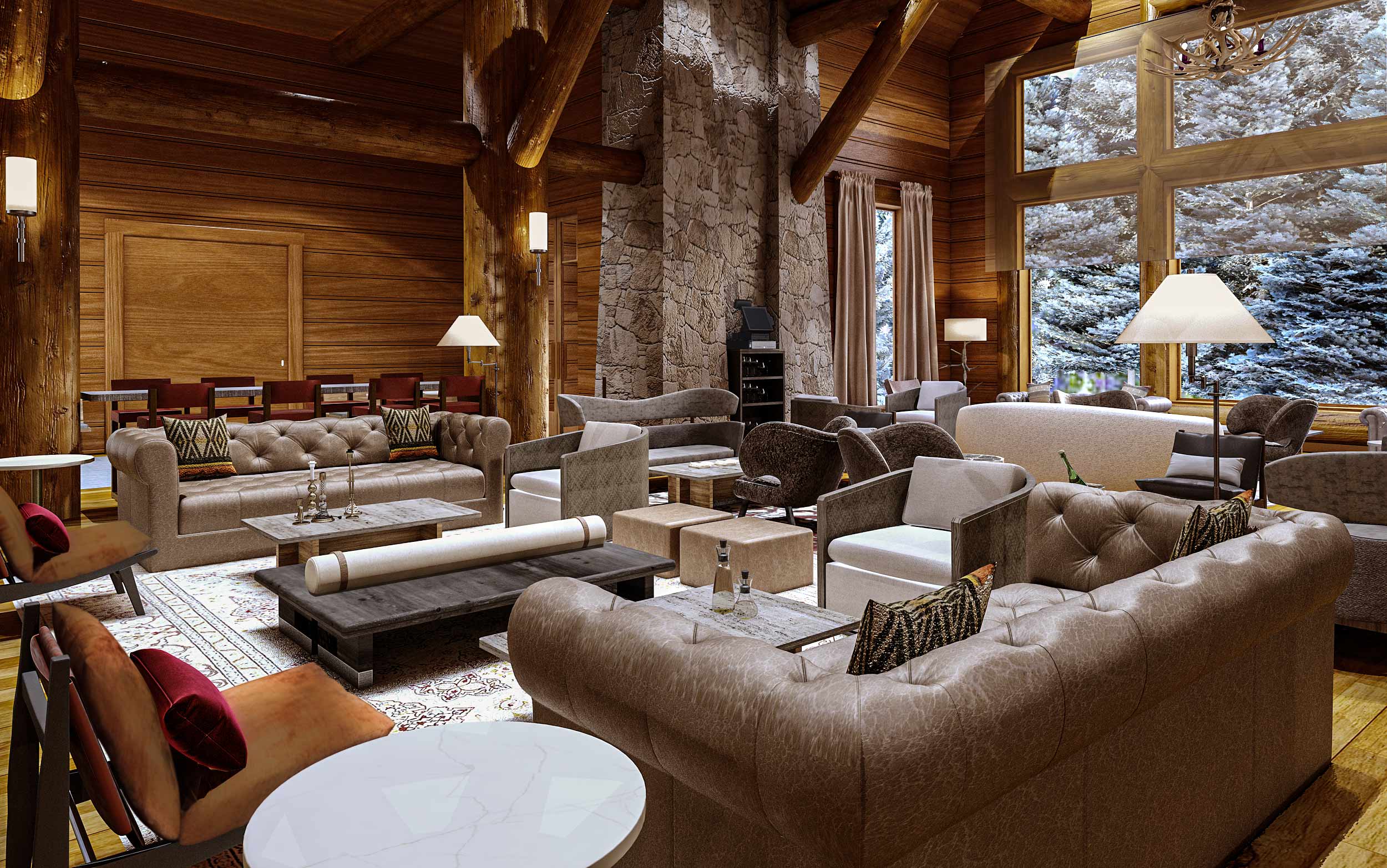
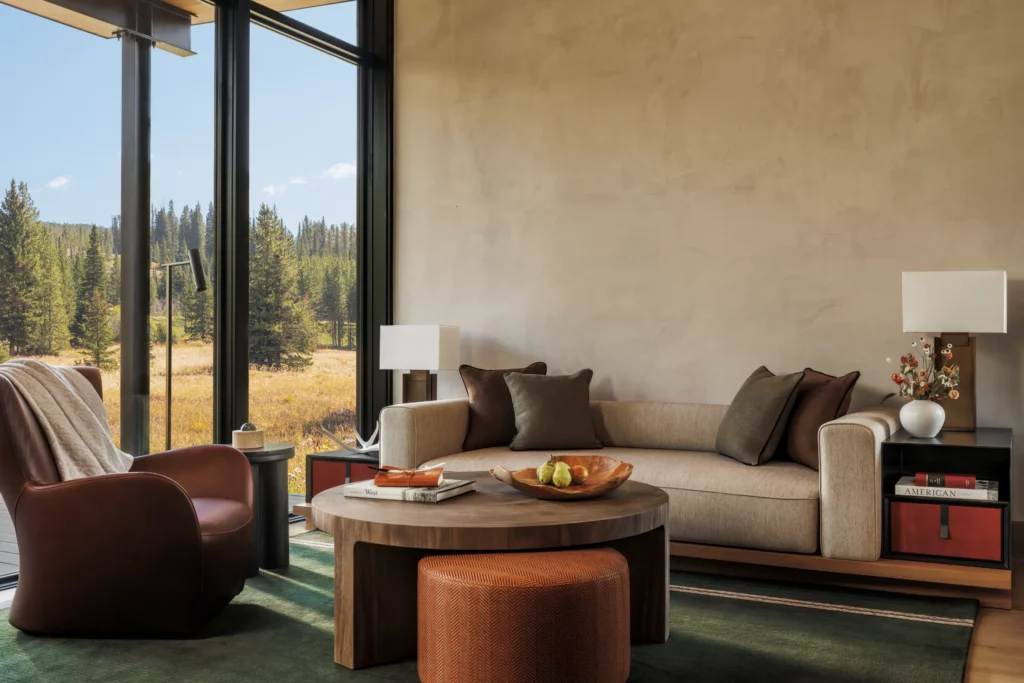
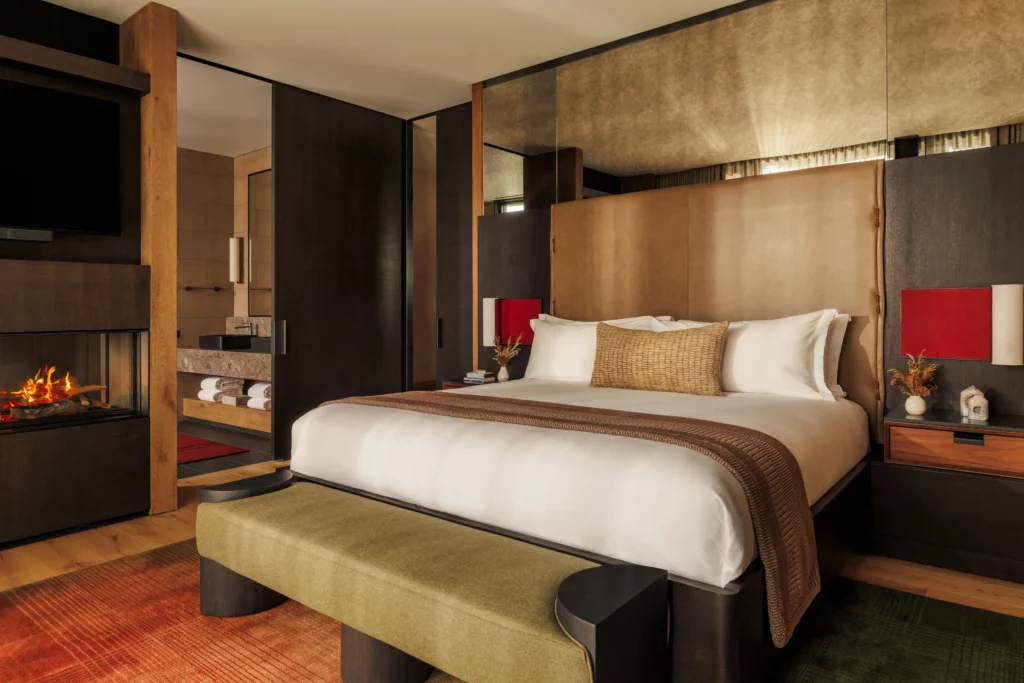
Axminster carpet: A woven carpet construction commonly considered for hospitality installations where pattern detail and repeated traffic are important. At One&Only Moonlight Basin in Big Sky, Montana, Nourison Hospitality developed a flooring program with Olson Kundig and purchasing agent Beyer Brown. Axminster carpet was used throughout the corridors, while custom hand-tufted rugs and Nourmak Plus constructions were specified for guestrooms, suites, and public spaces. The project demonstrates why construction choices should follow the needs of each environment.
Which Rug Fibers Work Best in High-Traffic Areas?
Fiber content affects appearance retention, cleaning requirements, and how a rug responds to daily use.
Wool: Naturally resilient, with a spring-like fiber structure that helps it recover from compression. Wool quality, construction, and maintenance all influence performance.
Nylon: Common in commercial carpeting because of its resilience and suitability for repeated traffic when properly specified.
Polypropylene: Offers moisture and stain resistance, although performance varies by construction and product.
For blended fibers, check the exact composition rather than relying on a broad description such as “wool blend.”
The best rug for a high-traffic area is one whose fiber and construction have been evaluated together for that application. For a closer look at construction, read our guide to hand-knotted rugs.
Why Do Pile Type and Height Matter?
Pile height affects furniture movement, cleaning access, and the overall thickness of the floor covering. Pile structure matters just as much.
A dense, low-profile surface is often practical in areas with rolling luggage or frequent chair movement, provided the product is approved for that use. A softer cut pile may suit a guest room where comfort is a greater priority.
What to check: Record the listed pile height and pile type, then confirm the rug’s total installed thickness, including any pad. Check door clearance and transitions to adjoining flooring.
Our guide to the best rug pile for each room explains how pile selection changes with furniture, traffic, and room function.
What Should Designers Know About Rug Backing and Shedding?
Backing affects dimensional stability, installation, and the cleaning methods a rug can tolerate. A hand-tufted rug may have a different backing system from a hand-knotted rug, while broadloom carpet requires its own installation specifications.
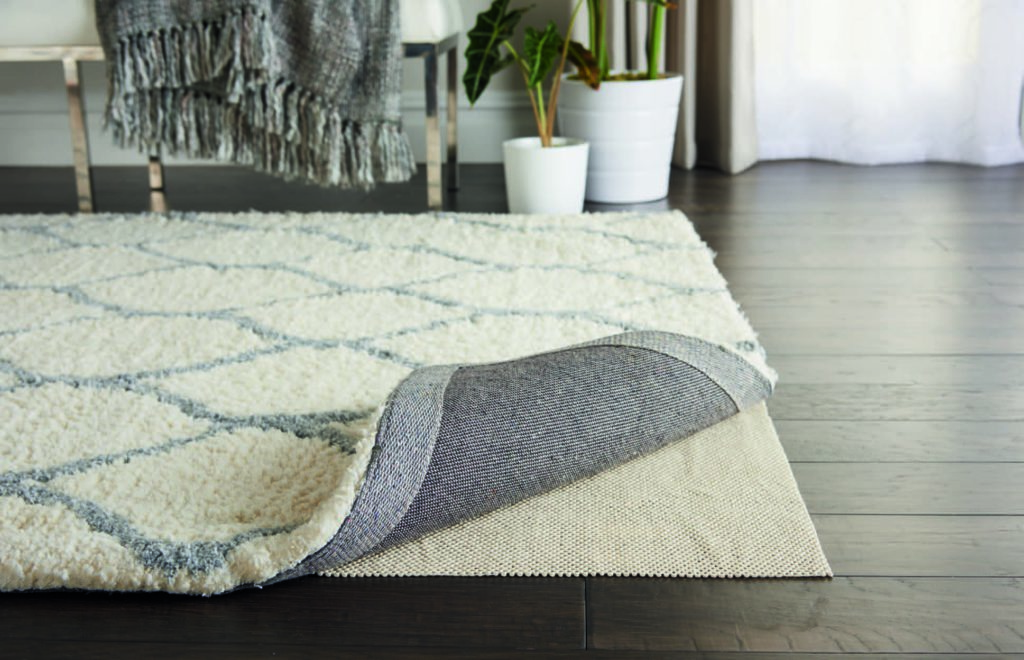
Check whether a rug requires a pad, how its edges are finished, and whether the proposed installation can prevent movement, curling, or raised transitions.
Shedding should also be reviewed, particularly for wool rugs. Some initial loose-fiber shedding can be normal, but the amount varies by construction and product. Request product-specific guidance rather than assuming every wool rug behaves the same way.
How Should Cleaning Instructions Influence a Specification?
A maintenance plan should be established before the flooring is installed.
Commercial spaces may require frequent vacuuming, prompt spot treatment, and periodic professional cleaning. The appropriate methods depend on the rug’s fiber, construction, backing, and finish.
For hospitality projects, confirm which equipment and cleaning products are approved. A cleaning method suitable for installed commercial carpet may be inappropriate for a handmade area rug.
What to check: Review routine vacuuming instructions, spot-cleaning procedures, professional cleaning recommendations, and any restrictions that could affect the property’s housekeeping program.
When Is Custom Sizing Necessary?
Custom sizing allows designers to account for architectural features, furniture layouts, and circulation paths that standard rug dimensions may not accommodate.
In hospitality interiors, the placement of a rug can influence how guests move through a room. Designers should establish clearances around doors, seating, and circulation routes before finalizing dimensions.
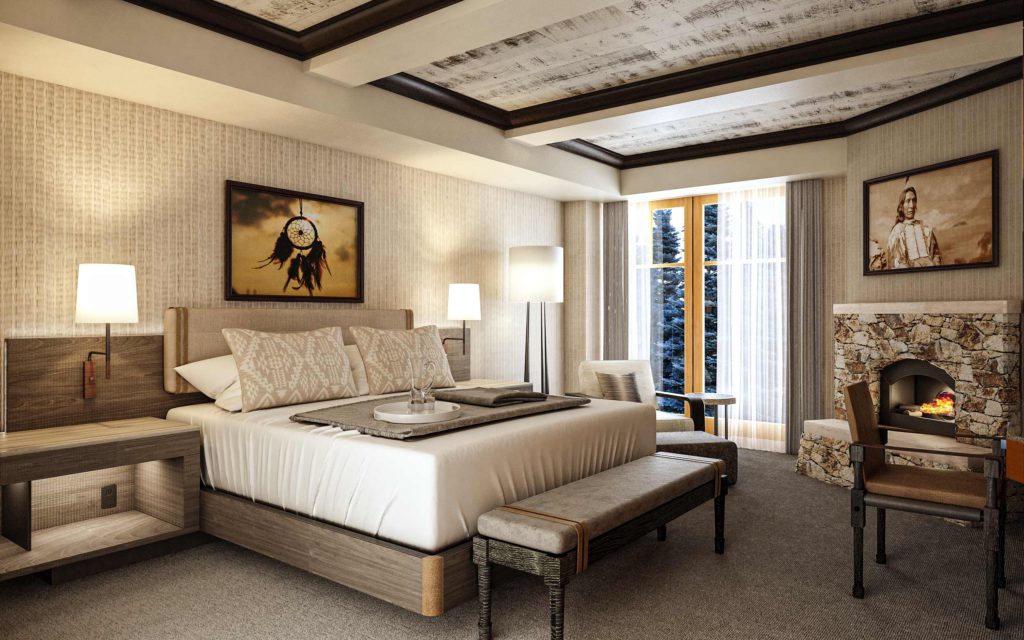
Projects such as The Ritz-Carlton, Bachelor Gulch offer a useful visual reference for coordinating flooring with furnished guest suites and shared spaces. Exact construction, sizing, and installation details should be confirmed against the project’s records before being used as technical specifications.
For additional design considerations, see our custom rugs guide.
What Should a Complete Commercial Rug Specification Include?
Before approving a selection, request a current technical sheet that identifies:
- Approved traffic level and application
- Construction method and fiber percentages
- Pile type, pile height, and total thickness
- Backing, edge finishing, and installation requirements
- Shedding expectations and cleaning instructions
- Available dimensions and custom-sizing options
- Applicable performance testing and documentation
A well-prepared specification also considers the installation as a whole. A suitable rug can still present problems if its edges, pad, or transitions are poorly planned.
For project-specific flooring solutions, explore Nourison Hospitality.
Frequently Asked Questions
Q: What is the best rug for a high-traffic area?
A: The best high traffic rug has a construction, fiber, pile, and installation method approved for the expected use. For commercial settings, confirm the manufacturer’s application rating and relevant performance documentation before specifying it.Q: What should I look for in a commercial rug?
A: Review traffic suitability, commercial approval, construction, fiber content, pile height, backing, cleaning instructions, and sizing. Check installation requirements and any applicable fire-performance or building-code documentation as well.Q: What does a rug traffic rating mean?
A: A traffic rating indicates the level of use for which a rug is recommended. Light, moderate, and heavy traffic descriptions are useful starting points, but they are not substitutes for documented commercial approval or project-specific performance requirements.