The Best Rug Pile for Each Room
The best rug pile height depends on what happens in the room. Low pile works well where doors, dining chairs, or desk chairs need to move freely, while medium and high pile rugs can add more cushioning in bedrooms and quieter living spaces. Traffic, cleaning, furniture, and clearance all matter.
If you need a refresher on the basics, our guide to high-pile vs. low-pile rugs explains how the different pile types feel and perform. Here, we’re focusing on placement: which pile makes the most sense once you know where the rug is going.
As a general guide, a low pile rug sits close to the floor, often around 1/4 inch or less. Medium pile falls roughly between 1/4 and 1/2 inch, while a high pile rug extends beyond that. These ranges are useful reference points rather than universal standards, since construction and density also affect how thick a rug feels underfoot.
What Rug Pile Works Best in a Bedroom?
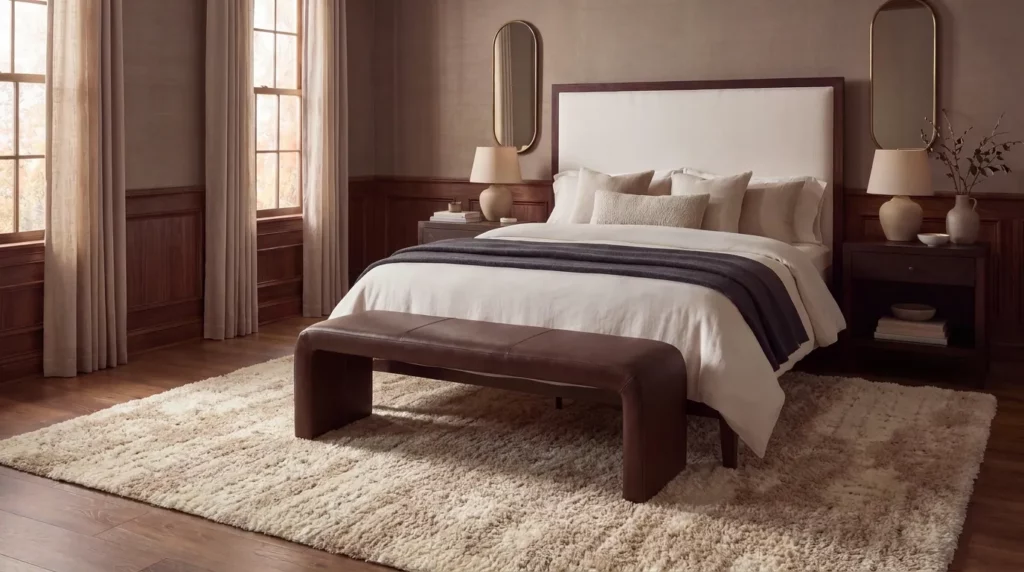
A bedroom is one of the easiest places to use a medium or high pile rug. Foot traffic tends to be lighter than it is in an entryway or family room, and softness usually matters more than chair movement or door clearance.
A higher-pile bedroom rug gives bare feet a cushioned landing beside the bed. Wool, dense cut-pile constructions, and other soft surfaces can work particularly well here because the rug is less likely to contend with constant spills, outdoor dirt, or rolling furniture.
That does not mean every bedroom needs a thick rug. A low pile rug may make more sense if the bedroom door swings directly across it, the rug extends under several pieces of heavy furniture, or easier vacuuming is a priority.
Placement matters, too. A large rug under the bed typically sees less direct wear through the center, while runners placed alongside the bed receive more concentrated foot traffic. If you are still deciding how large the rug should be, see our quick guide to choosing the right size rug.
Best starting point: Medium pile for a mix of softness and easier upkeep. High pile works well when comfort is the priority and clearance is not an issue.
For a bedroom with room for a deeper surface, the Luxurious Shag LXR01 Ivory Beige rug has a 1.25-inch plush shag pile, power-loomed from soft polyester performance fibers. Its abstract ivory-and-beige pattern brings variation to a quiet palette.
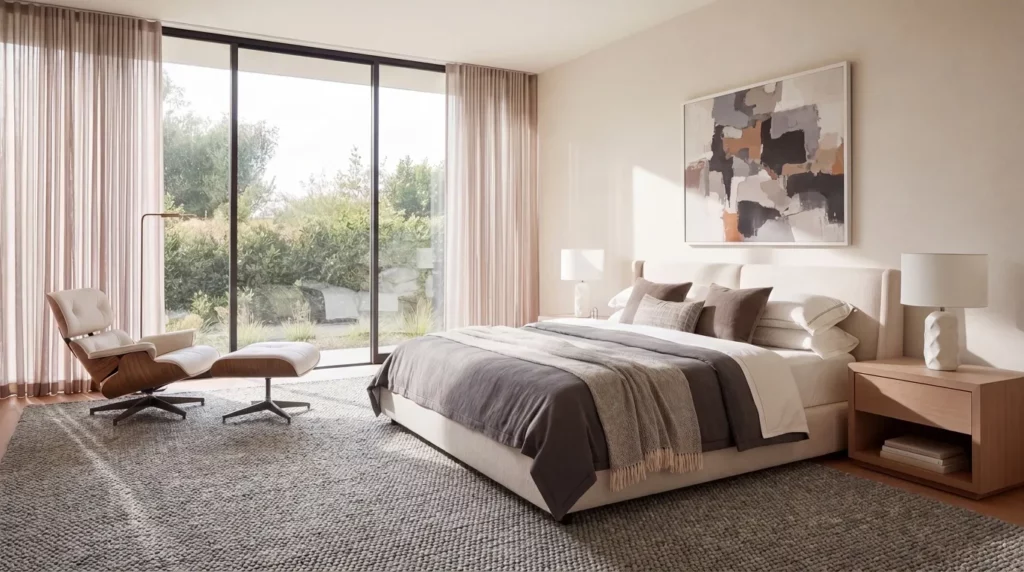
The DKNY Pure Knots KNT01 Grey rug offers a different feel: a handwoven, chunky loop pile in a wool-and-polyester blend, with a listed height of 0.75 inch. Both are recommended for moderate foot traffic, making them better examples for comfortable bedrooms than heavily used entrances.
What Pile Height Is Best for a Living Room Rug?
For most living rooms, low to medium pile offers the most practical balance. It gives a living room rug some cushioning without making everyday furniture placement and cleaning unnecessarily difficult.
The right choice depends on how the room is actually used.
In a busy family room, a lower pile handles frequent walking, pets, children, and regular vacuuming more easily. Sofa legs, coffee tables, and accent chairs also sit more steadily on a flatter surface.
A quieter living room gives you more flexibility. Medium pile can add noticeable softness without the deeper surface of a high pile rug. High pile can work in a conversation area with lighter traffic, but consider how often furniture is moved and how much maintenance the construction requires.
Pile density matters alongside height. A dense medium pile may feel more substantial underfoot than a taller but loosely constructed rug, so pile height alone should not be treated as a measure of quality.
For rooms built around distinctive craftsmanship, construction may influence the decision as much as thickness. Our guide to whether hand-knotted rugs are worth it looks more closely at how construction affects longevity, texture, and value.
Best starting point: Low to medium pile for everyday living rooms. Reserve deeper pile for lower-traffic seating areas where softness carries more weight than easy furniture movement.
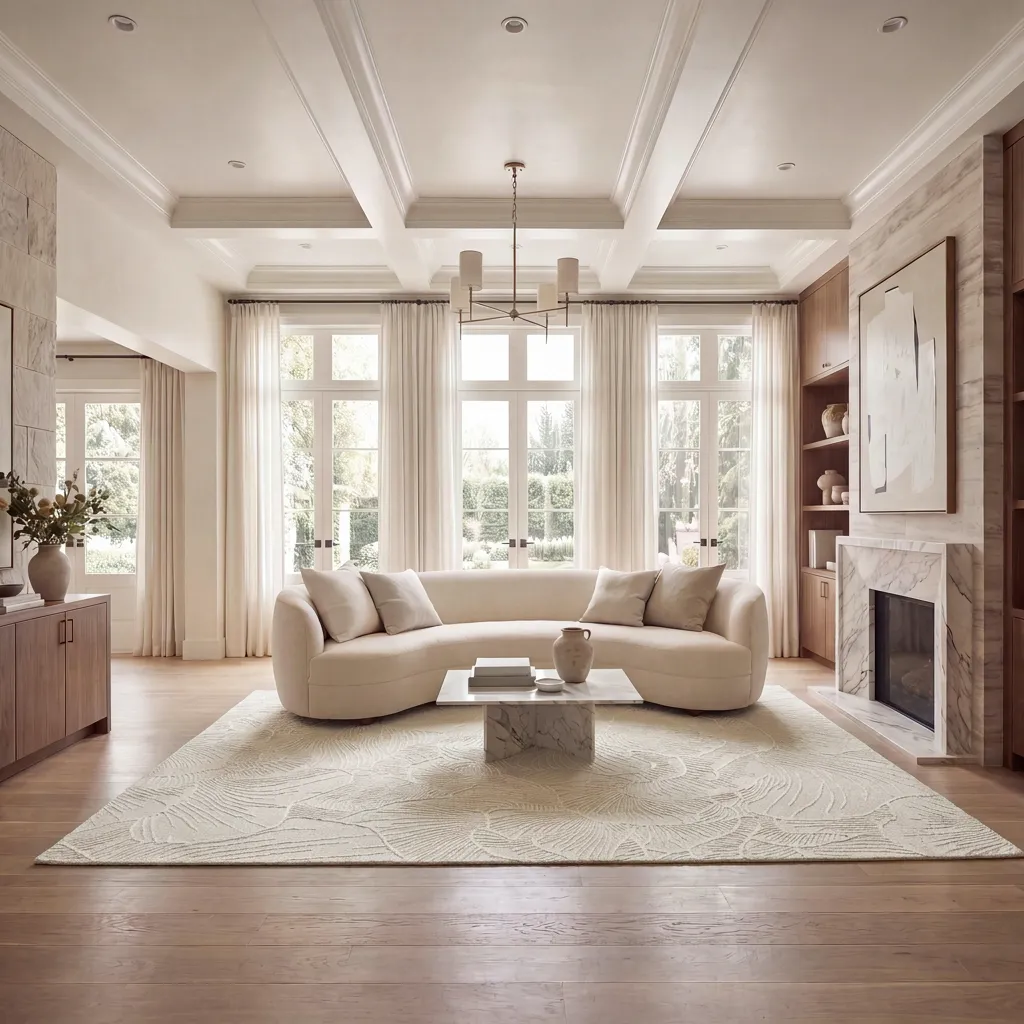
The Avra AVR01 Ivory rug illustrates what a medium-height surface can bring to a living room. Hand-tufted from a wool-and-rayon blend, its 0.5-inch cut-and-loop pile gives an oversized botanical design a gently sculpted appearance.
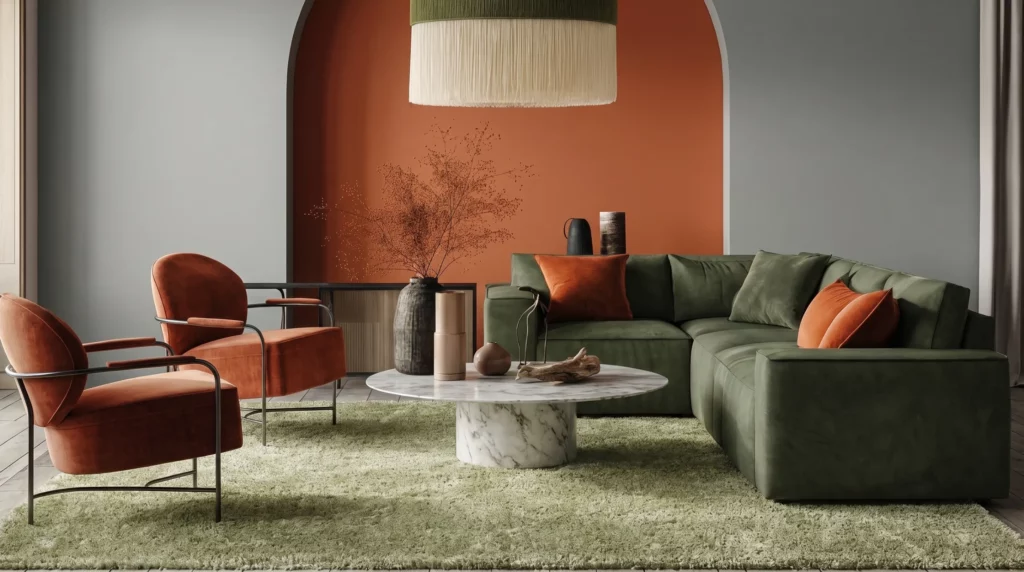
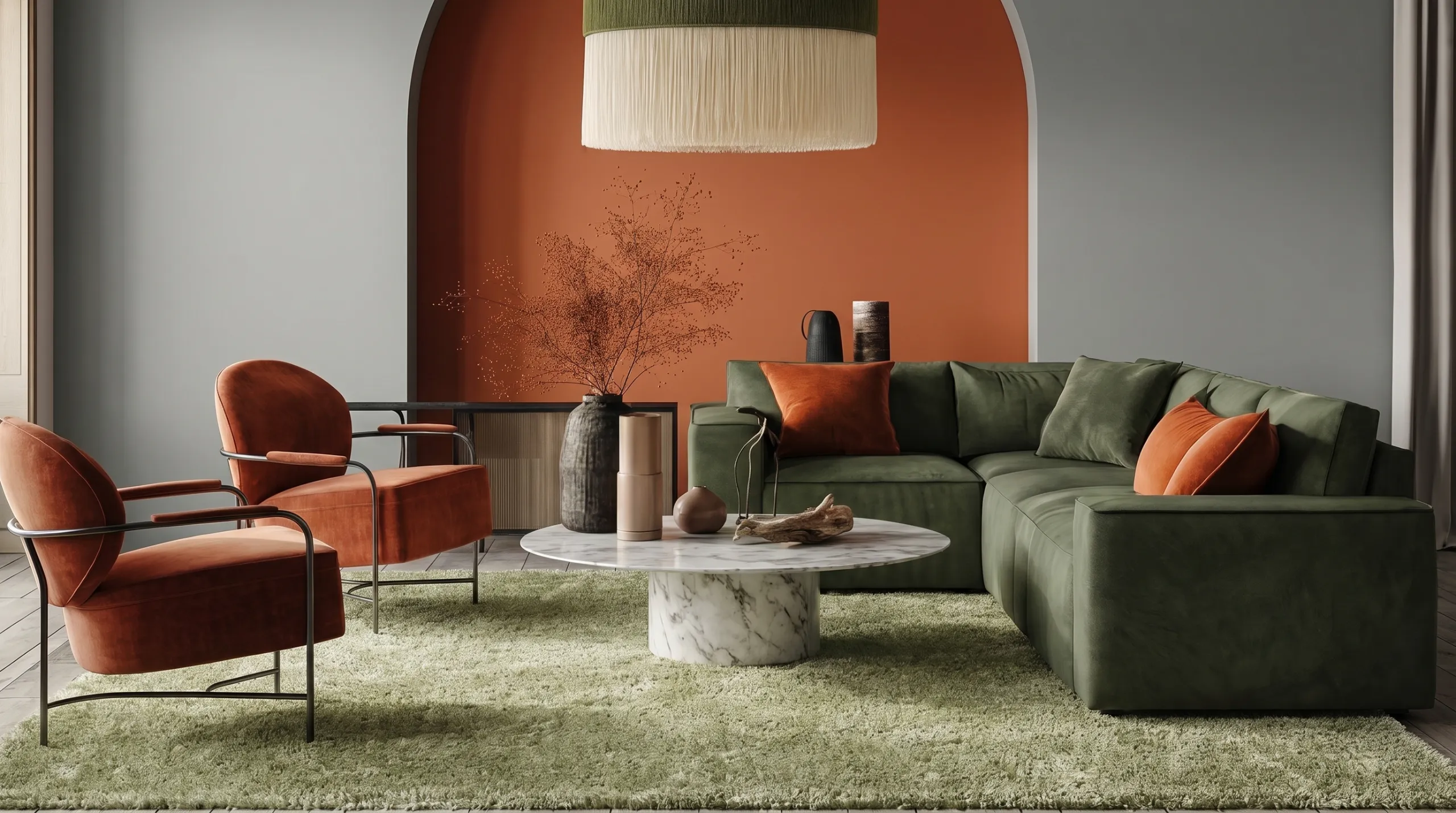
Pacific Shag PCS01 Green offers a different living room approach: its one-inch plush shag pile suits a quieter seating area where softness is a priority and furniture is moved less often. Keep it away from sources of ignition, as directed in its product guidance.
What Type of Rug Works Best Under a Dining Table?
A low pile rug is usually the most practical choice for a dining room. Dining chairs slide more easily across a flatter surface, and crumbs are less likely to settle deep between the fibers.
That matters because a rug under a dining table has a different job than one beside a bed. Chairs move across it repeatedly. Food lands on it. Table legs place steady pressure on the same areas.
A thick, plush surface can catch chair legs or make chairs harder to pull away from the table. A low pile rug for a dining room keeps the surface more stable and makes routine vacuuming easier.
Flatweave and other low-profile constructions are particularly useful here. If you prefer more cushioning, a dense medium pile can still work, provided dining chairs move easily across it and remain fully on the rug when pulled out.
Rug dimensions matter just as much. The rug should extend far enough beyond the table for chairs to remain on the surface while someone is seated. Our ultimate guide to choosing dining room rugs covers sizing, shape, materials, and placement in more detail.
Best starting point: Low pile or flatweave for easier chair movement and cleanup.
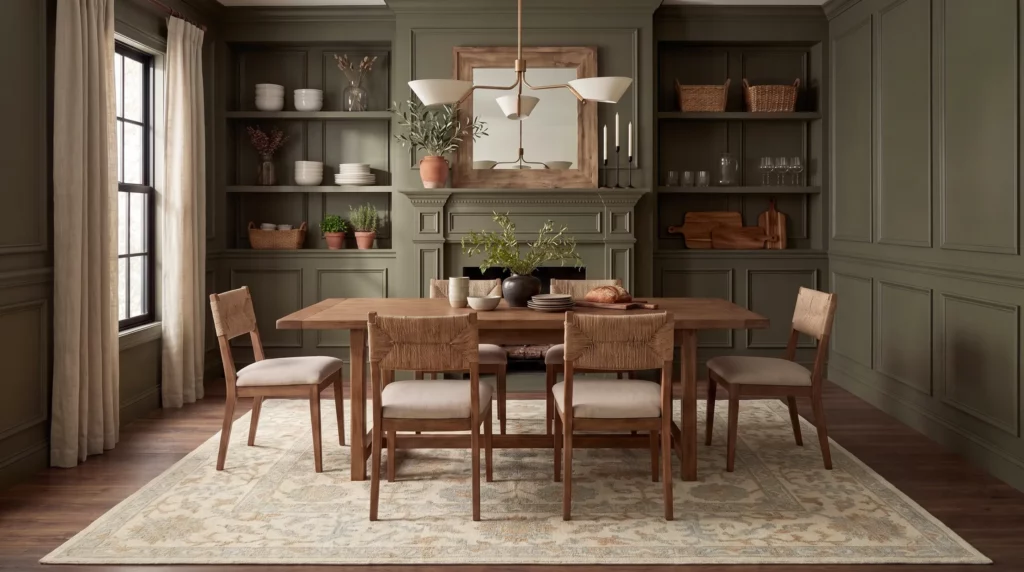
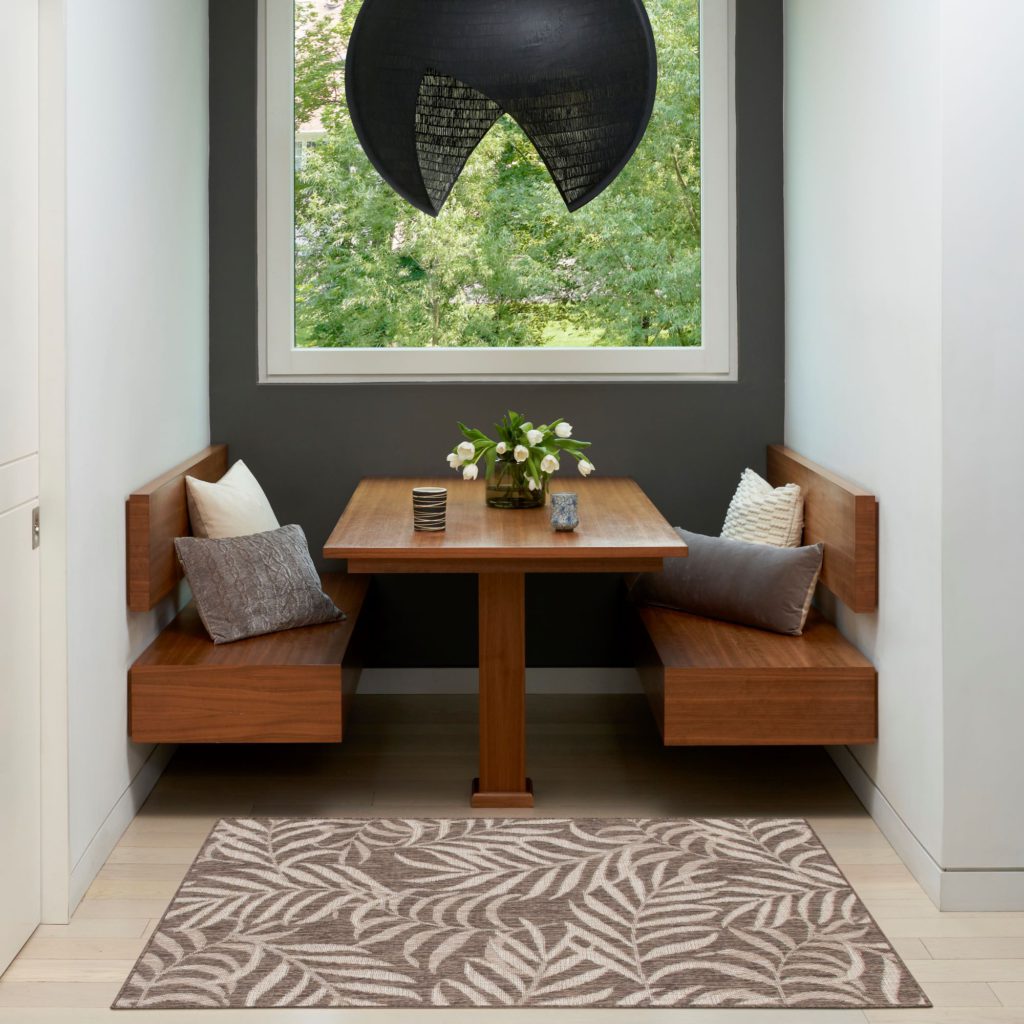
In the dining room shown, the Celia CIA01 Ivory area rug features a 0.5-inch pile, hand-tufted wool-and-rayon construction, Oushak-inspired florals, and a narrow border. Since dining chairs move frequently across the rug, consider how easily they slide over its surface before choosing it for an everyday dining space.
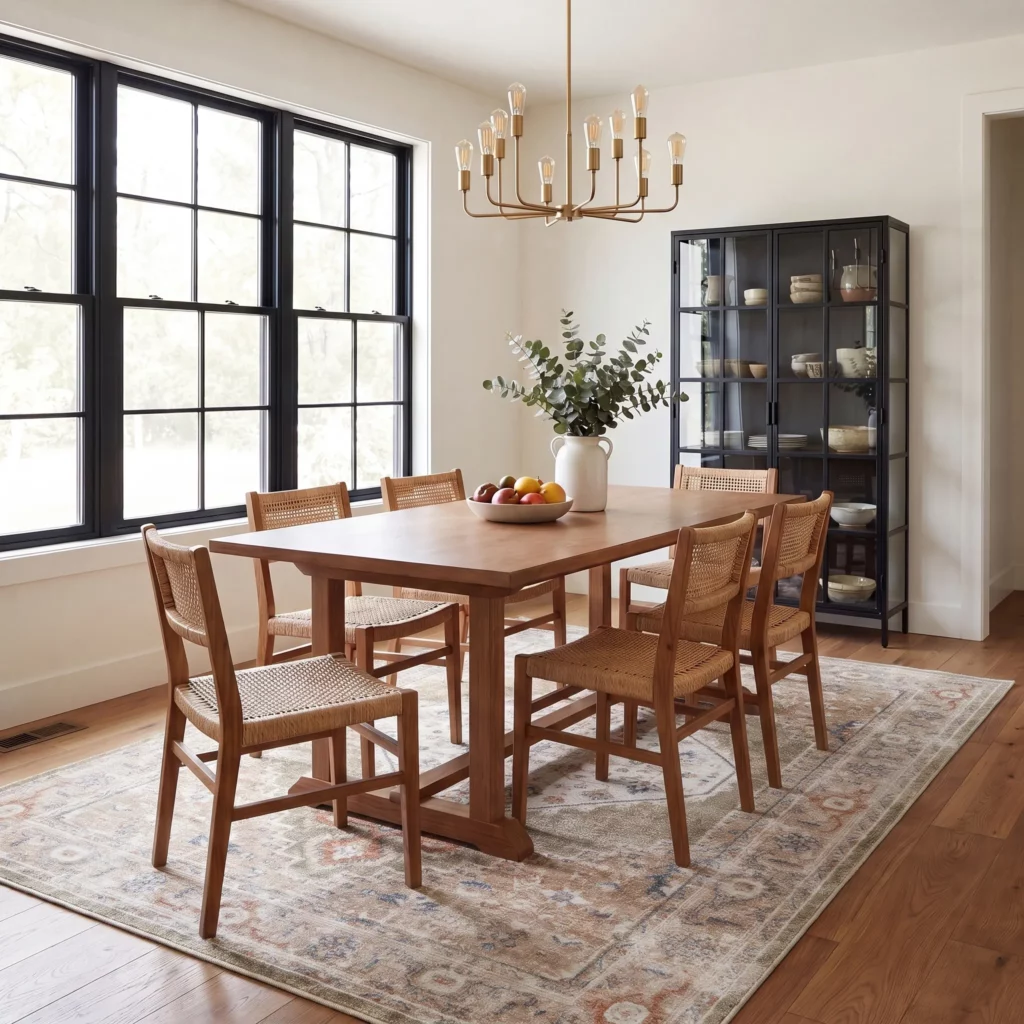
The Astra Washables ASW11 Sage Multi area rug offers a lower-profile alternative, with a 0.25-inch pile, flatwoven power-loomed construction, and a faded Persian-inspired medallion design. Its machine-washable construction makes it a practical choice for everyday dining spaces, where spills can be cleaned according to the product’s care instructions.
Is a Low Pile Rug Better for an Entryway?
In most entryways, yes. A low pile entryway rug sits closer to the floor, is easier to vacuum, and is less likely to interfere with a swinging door.
Entryways deal with concentrated wear. Shoes carry in grit and moisture, foot traffic follows the same path, and the rug may sit directly beside an exterior door. A thick pile can trap more debris and may compress unevenly in the busiest areas.
For that reason, many of the best entryway rugs favor a lower profile and a surface that can handle regular cleaning. The same logic applies to a mudroom rug or an indoor rug positioned just inside the front door.
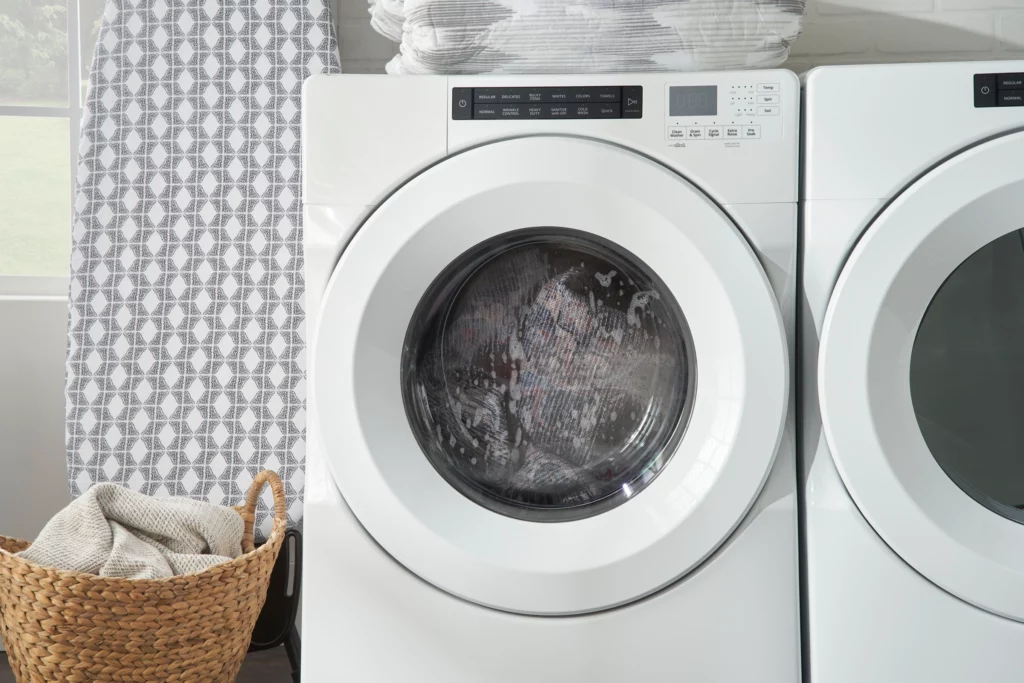
Washability may also be useful in these spaces, but check the individual rug’s care instructions rather than assuming every washable construction can be cleaned in the same way. Our guide to whether washable rugs actually work explains what to look for.
There is one measurement you should make before buying any entryway rug: the space beneath the door.
Best starting point: Low pile, especially near exterior doors and other high-traffic entrances.
What Rug Pile Works Best in a Hallway?
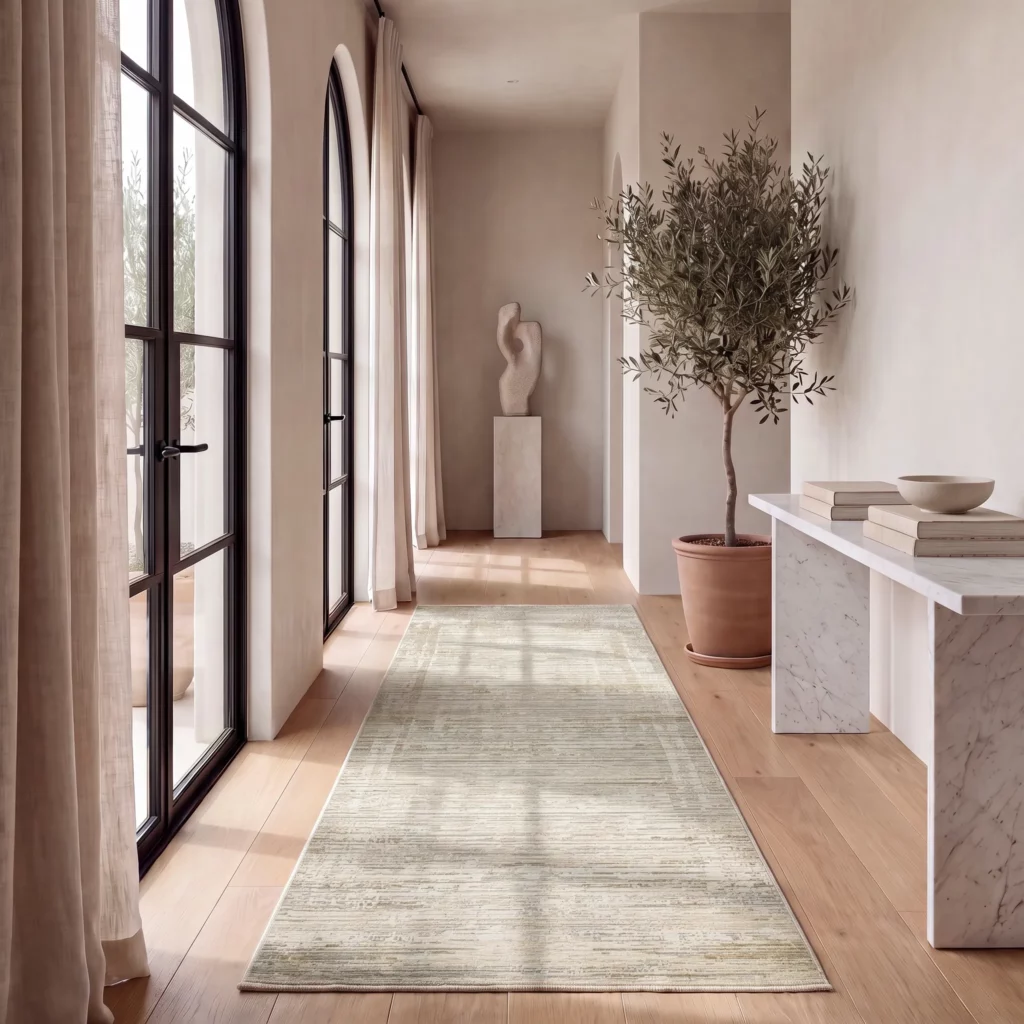
A low to medium pile runner can work well in a hallway, provided it lies securely and does not catch under adjoining doors. The Calvin Klein CK078 Summit SUM03 Natural Ivory runner, measuring 2 feet 2 inches by 10 feet, features a 0.32-inch high-low pile that introduces subtle abstract texture without the depth of a shag rug. Before placing a runner near a door, check its full thickness, including any rug pad, to ensure adequate clearance.
How Much Door Clearance Do You Need Over a Rug?
A rug should sit low enough for the door to open freely without dragging, bunching, or repeatedly brushing the surface. Measure the clearance between the bottom edge of the open door and the finished floor before choosing the rug.
Do not compare that measurement with pile height alone.
The rug’s total profile can include:
- the pile
- the foundation or backing
- any rug pad underneath
A rug listed with a 1/4-inch pile may therefore sit slightly higher once its full construction and rug pad are taken into account.
To check door clearance, open the door over the area where the rug will sit and measure vertically from the floor to the lowest point of the door. Then compare that space with the rug’s full thickness plus the rug pad.
Leave some breathing room rather than choosing a rug that barely clears. Repeated friction can wear the rug surface, shift the rug out of position, or prevent the door from opening smoothly.
This is one reason a low-profile entryway rug is often the safer choice near a front door.
What Rug Pile Works Best in a Home Office?
A low pile office rug is usually the easiest choice when a rolling desk chair is involved. Chair casters move with less resistance across a flatter surface and are less likely to sink into the pile.
If you are placing a rug under a desk, think about the full work zone rather than the desk alone. The rug should extend far enough behind the chair for the casters to remain on the rug while you are seated and while you pull back.
A rug under an office chair also needs a surface that can withstand repetitive movement. Deep pile can slow the chair down and may develop visible tracks where the casters repeatedly pass.
A medium pile rug can still work in a home office without a rolling chair, or in a separate seating area away from the desk. In larger offices, using different rug textures can help distinguish a work zone from a reading or meeting area without sacrificing function at the desk.
Best starting point: Low pile beneath desks and rolling chairs. Medium pile can work in office seating areas with stationary furniture.
Which Rug Pile Is Best for Each Room?
Here is the short version:
| Room | Recommended Pile | Why It Works |
| Bedroom | Medium to high | More cushioning underfoot, with generally lighter traffic |
| Living room | Low to medium | Comfortable while remaining practical around everyday furniture |
| Dining room | Low | Chairs move more easily, and crumbs are easier to remove |
| Entryway | Low | Better suited to concentrated traffic and door clearance |
| Home office | Low | Rolling desk chairs move with less resistance |
These are starting points, not rigid rules. Construction, fiber, rug density, traffic, furniture, cleaning habits, and the exact layout of the room can all change the recommendation.
A low pile rug made from a dense construction behaves differently from a loose, plush rug of similar height. The same applies to natural fibers, washable rugs, hand-knotted rugs, and other constructions. Choose pile height alongside the material and how the room functions.
If your project requires a precise shape, dimension, or installation, our guide to custom rugs explains where made-to-measure options can solve placement problems that standard rug sizes cannot.
How to Choose the Right Rug Pile for Your Room
Before settling on a rug, check these five things:
- Traffic: Busy entryways, dining rooms, and family spaces generally benefit from a lower profile.
- Furniture movement: Dining chairs and rolling office chairs move more freely over low pile.
- Door clearance: Measure beneath every door that will swing across the rug, including the rug pad in your total thickness.
- Cleaning: Lower pile usually gives dirt and crumbs fewer places to settle, while deeper pile may require more deliberate vacuuming.
- Comfort: Bedrooms and quieter sitting rooms give you more freedom to choose medium or high pile when softness is a priority.
There is no single pile height that belongs in every room. Start with what the space asks of the rug, then choose the construction, material, and surface that support it.
For nearby spaces with their own performance demands, see our guide to why you need a kitchen rug.
Frequently Asked Questions
Q: What pile height is best for a living room rug?
A: Low to medium pile works well in most living rooms because it provides some cushioning while remaining practical around sofas, coffee tables, pets, and regular foot traffic. A high pile rug can work in a lower-traffic living room where softness is the priority.Q: Should a bedroom rug be high pile or low pile?
A: Bedrooms can accommodate medium and high pile rugs particularly well because they generally experience lighter traffic. Choose low pile instead if the rug sits beneath a swinging door or you want a surface that is quicker to vacuum.Q: What rug works best under a dining table?
A: A low pile rug or flatweave is usually the easiest choice under a dining table. The lower surface allows dining chairs to move more freely and makes crumbs easier to vacuum.Q: What type of rug works best under an office chair?
A: A low pile office rug works best beneath most rolling desk chairs because the casters encounter less resistance. Make sure the rug also extends far enough behind the desk for the chair to stay on the surface when pulled back.Q: Does a rug pad affect door clearance?
A: Yes. A rug pad adds height beneath the rug, so door clearance should be based on the combined thickness of the pile, rug construction, and pad. Measure the open space beneath the door before choosing both.Q: Are low pile rugs easier to clean?
A: Low pile rugs are generally easier to vacuum because dirt, crumbs, and pet hair have less depth in which to settle. Cleaning requirements still depend on the rug’s fiber, construction, backing, and manufacturer care instructions.